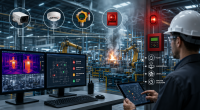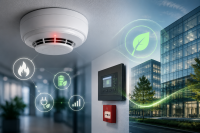
As buildings become increasingly connected through digital technologies, fire safety is undergoing a significant transformation. Traditional fire protection systems were primarily designed to detect, alert, and suppress fires as standalone solutions. While these systems remain essential, modern smart buildings are redefining how fire safety functions by integrating fire protection with intelligent building management systems (BMS), Internet of Things (IoT) devices, artificial intelligence (AI), cloud-based monitoring, and real-time data analytics.
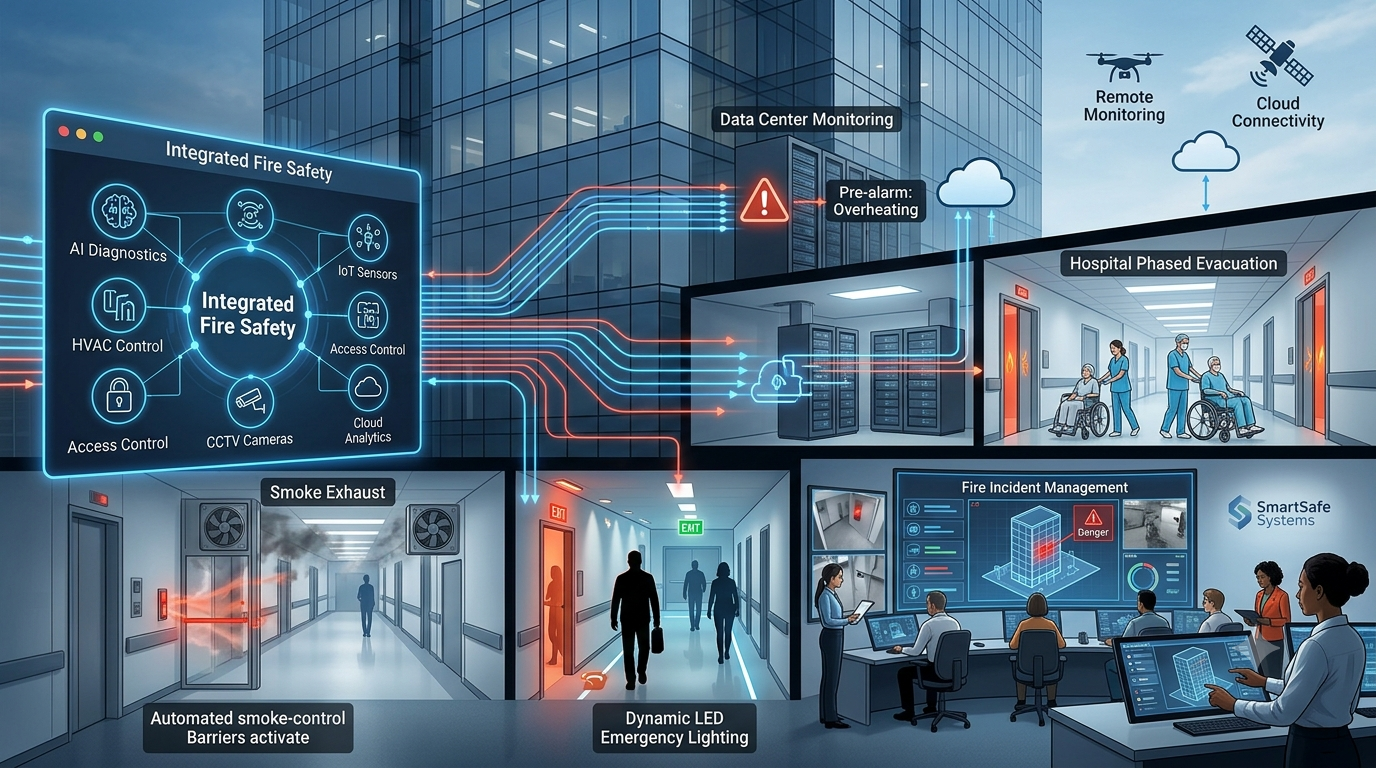
Rather than operating independently, today’s fire protection systems can communicate with HVAC systems, access control, elevators, emergency lighting, surveillance cameras, and facility management platforms. This integrated approach enables faster emergency response, improves occupant safety, reduces operational disruptions, and provides building owners with valuable insights for preventive maintenance. Across the world, commercial buildings, hospitals, airports, hotels, industrial facilities, and data centers are already demonstrating how smart integration creates safer and more resilient environments.
The Evolution of Fire Safety in Smart Buildings
Conventional fire alarm systems typically activate alarms once smoke or heat is detected, requiring manual assessment before emergency responders can determine the severity of the incident. Although highly reliable, these systems often provide limited contextual information.
Smart building technology expands these capabilities by connecting multiple building systems into a unified network. When a fire event occurs, information from various sensors—including smoke detectors, heat detectors, air quality sensors, occupancy sensors, CCTV cameras, and access control systems—is analyzed simultaneously. Building operators receive detailed information about the exact location, affected zones, occupant distribution, and the progression of the incident in real time.
This interconnected ecosystem allows emergency procedures to begin automatically. Elevators can be recalled to designated floors, HVAC systems can isolate smoke from spreading, fire doors can close to compartmentalize affected areas, emergency lighting can activate along evacuation routes, and access control systems can unlock emergency exits. These automated responses minimize confusion while helping occupants evacuate safely and efficiently.
Real-World Success Stories
Several landmark projects around the world have demonstrated the benefits of integrating fire safety with smart building technologies.
Modern airports, for example, rely on thousands of interconnected devices to manage millions of passengers each year. Fire detection systems are linked directly with ventilation controls and passenger information systems, allowing smoke management strategies to be executed automatically while digital signage provides dynamic evacuation instructions. This coordinated response significantly improves emergency management in large, complex facilities.
Healthcare facilities also benefit tremendously from integrated fire safety systems. Hospitals cannot always perform full evacuations because many patients require continuous medical care. Smart fire protection systems help identify the exact location of an incident, allowing staff to conduct phased evacuations while maintaining critical operations. Integration with building automation ensures smoke control systems operate effectively, protecting vulnerable patients and supporting emergency medical teams.
Data centers represent another excellent example. Even a minor fire incident can lead to costly downtime and data loss. Intelligent fire protection systems continuously monitor environmental conditions such as temperature fluctuations, airflow changes, and equipment status. Early warning technologies can detect potential hazards before visible smoke develops, enabling facility managers to investigate issues and prevent equipment damage while maintaining uninterrupted business operations.
Commercial office towers are also embracing smart fire safety. Occupancy sensors, digital access systems, and visitor management platforms provide valuable information during emergencies by identifying which areas are occupied and which evacuation routes remain available. Building operators can make informed decisions based on live data rather than relying solely on fixed emergency procedures.
Artificial Intelligence Enhances Fire Prevention
One of the most promising developments in smart fire safety is the application of artificial intelligence. AI-powered systems can analyze historical sensor data, identify unusual equipment behavior, and predict potential fire risks before they become emergencies.
For example, electrical panels that consistently generate abnormal heat patterns may indicate deteriorating components or overloaded circuits. Instead of waiting for smoke detectors to activate, predictive analytics can notify maintenance teams to inspect the equipment before a fire occurs.
Similarly, AI-assisted video analytics can distinguish between genuine fire events and harmless environmental conditions, reducing false alarms that often disrupt building operations. This not only improves emergency response but also increases confidence among occupants and facility managers in the reliability of fire detection systems.
Remote Monitoring and Cloud Connectivity
Cloud technology has expanded the capabilities of fire protection systems beyond the physical building. Facility managers can now monitor multiple buildings from centralized control centers, receiving instant notifications whenever alarms, faults, or maintenance issues occur.
Remote diagnostics allow technicians to identify equipment problems without immediately traveling to the site, reducing maintenance costs and improving response times. Historical data stored securely in the cloud also supports compliance reporting, trend analysis, and long-term planning for system upgrades.
For organizations managing multiple facilities—such as universities, hotel chains, manufacturing companies, or commercial property developers—cloud-connected fire safety systems provide a consistent approach to monitoring safety performance across every location.
The Role of IoT in Smarter Fire Protection
The Internet of Things (IoT) connects fire safety devices into an intelligent communication network where information flows continuously between sensors, controllers, and management platforms. Instead of functioning as isolated devices, smoke detectors, sprinkler monitoring equipment, fire pumps, water storage tanks, emergency generators, and environmental sensors become part of an integrated ecosystem.
Continuous monitoring enables maintenance teams to identify developing issues before they affect system performance. Low water pressure, malfunctioning pumps, battery degradation, or communication failures can all be detected automatically, allowing repairs to be scheduled proactively rather than after an emergency occurs.
This predictive approach improves system reliability while reducing unexpected downtime and maintenance expenses.
Opportunities for Indonesia
Indonesia’s rapid urban development presents significant opportunities to adopt smarter fire protection technologies. New high-rise buildings, mixed-use developments, hospitals, industrial estates, airports, hotels, and data centers are increasingly incorporating building automation systems as part of their infrastructure.
Integrating fire safety with these digital platforms can strengthen emergency preparedness while supporting compliance with national fire safety regulations. In densely populated cities such as Jakarta, Surabaya, Bandung, and emerging metropolitan areas, intelligent fire protection systems can help reduce response times, improve evacuation efficiency, and minimize property damage during emergencies.
As Indonesia continues investing in smart city initiatives and sustainable infrastructure, connected fire safety systems will become an increasingly valuable component of modern building design.
Looking Ahead
The future of fire safety extends far beyond alarms and sprinkler systems. Smart buildings demonstrate that integrating fire protection with digital technologies creates a more proactive, responsive, and data-driven approach to life safety. Through the combination of IoT, artificial intelligence, cloud connectivity, and building automation, organizations can detect risks earlier, coordinate emergency responses more effectively, and maintain critical operations even during challenging situations.
Success stories from airports, hospitals, commercial buildings, and data centers illustrate that smart fire safety is no longer a concept for the future—it is already delivering measurable improvements in occupant protection, operational resilience, and facility management. As technology continues to evolve, integrated fire safety systems will play an increasingly important role in creating safer, smarter, and more sustainable buildings for communities around the world.