Manufacturing plants are complex environments where machinery, electrical systems, combustible materials, and high-temperature processes operate continuously. While these facilities drive industrial productivity, they also face significant fire risks that can lead to equipment damage, production downtime, financial losses, and, most importantly, threats to employee safety.
Fortunately, advancements in early detection technology have dramatically improved the ability of manufacturers to identify hazards before they develop into catastrophic incidents. By detecting the earliest signs of fire, overheating, or equipment malfunction, these systems allow operators to respond quickly and prevent disasters before they occur.
The Importance of Early Detection in Manufacturing
Unlike office buildings, manufacturing facilities often contain processes that generate heat, sparks, dust, flammable liquids, or combustible gases. Electrical panels, motors, conveyor systems, production lines, and storage areas all present potential ignition sources.
Traditional smoke detectors remain an essential part of fire protection, but they may only activate once smoke has already spread. In many manufacturing environments, every second counts. Detecting abnormal conditions earlier can significantly reduce the likelihood of a small issue escalating into a major emergency.
Early detection systems continuously monitor equipment and environmental conditions, providing immediate alerts when unusual patterns are identified.
Technologies That Help Prevent Industrial Disasters
Modern manufacturing facilities use a combination of technologies to provide comprehensive protection.
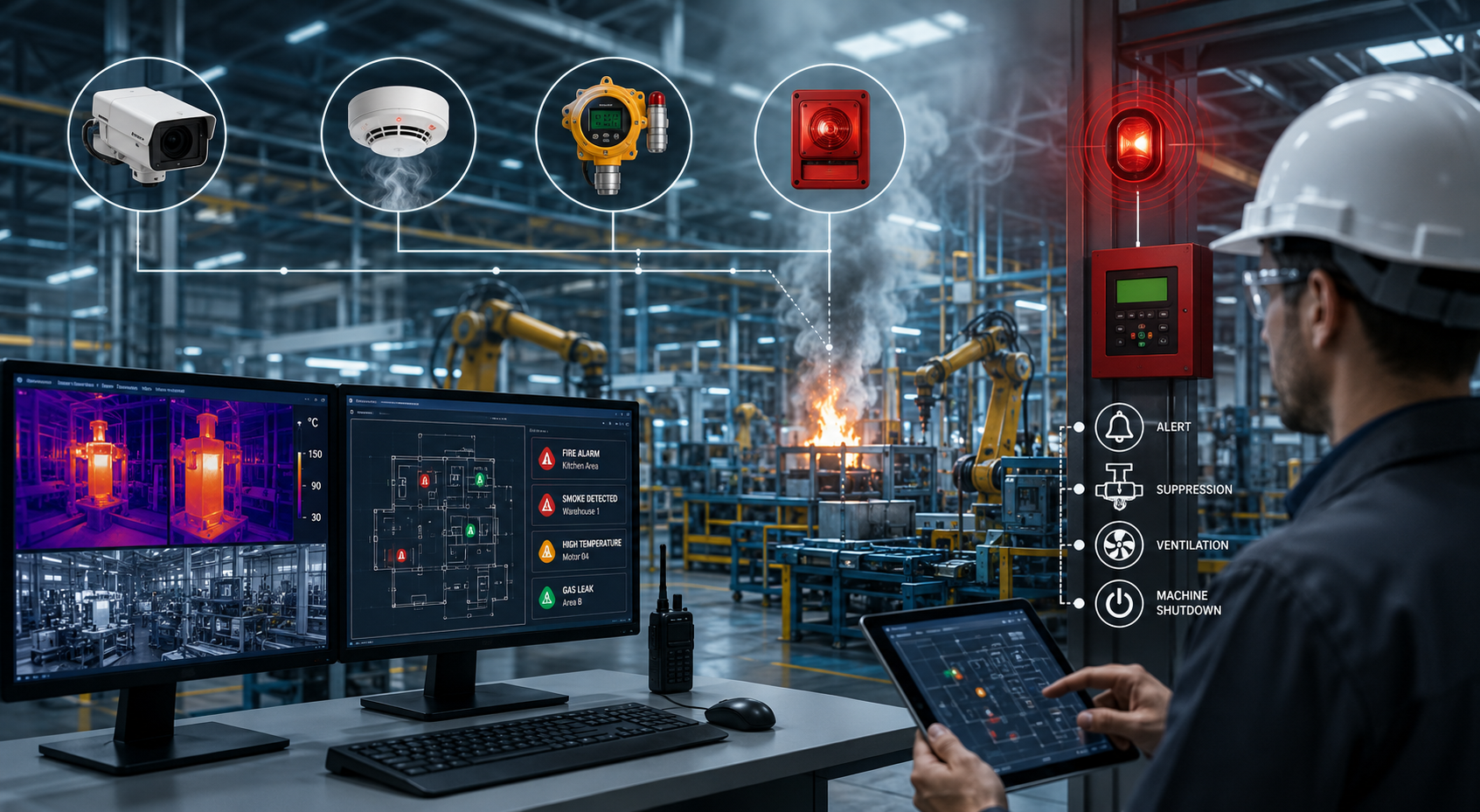
Thermal Imaging Cameras
Thermal cameras continuously monitor the temperature of critical equipment such as:
- Electrical switchboards
- Motors
- Bearings
- Conveyor systems
- Mechanical drives
These cameras detect overheating long before visible smoke or flames appear, allowing maintenance teams to investigate and repair faulty components before failure occurs.
Aspirating Smoke Detection (ASD)
Aspirating Smoke Detection systems actively draw air through a network of sampling pipes and analyze it for microscopic smoke particles.
Because ASD systems can detect smoke at extremely low concentrations, they are ideal for:
- Clean manufacturing areas
- Electronic production facilities
- Warehouses
- Data rooms within factories
Early notification enables personnel to investigate minor issues before they become dangerous fires.
Gas Detection Systems
Facilities that use combustible or toxic gases require continuous gas monitoring.
Gas detectors can identify leaks involving:
- Hydrogen
- Ammonia
- Carbon monoxide
- Methane
- LPG
- Various industrial process gases
Immediate alarms allow operators to isolate equipment, ventilate affected areas, and prevent explosions or hazardous exposure.
Intelligent Fire Alarm Systems
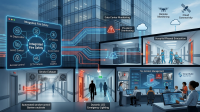
Modern addressable fire alarm systems integrate information from multiple detection devices, enabling faster and more accurate incident assessment.
These systems can automatically:
- Notify emergency responders
- Activate suppression systems
- Shut down machinery
- Control ventilation
- Trigger evacuation procedures
The result is a coordinated response that minimizes damage and improves occupant safety.
Real-World Examples of Early Detection Success
Many manufacturing facilities have successfully prevented costly incidents through proactive monitoring.
In one facility, thermal monitoring identified an overheating electrical connection inside a distribution panel during routine operation. Maintenance personnel repaired the loose connection before it caused arcing or ignition, avoiding an unplanned production shutdown.
Another manufacturer installed aspirating smoke detection in a sensitive electronics production area. The system detected microscopic smoke generated by a malfunctioning power supply before conventional detectors activated. The faulty equipment was isolated immediately, preventing damage to nearby production equipment.
Similarly, gas detection systems have repeatedly identified small gas leaks during maintenance activities, allowing workers to safely isolate affected equipment before hazardous concentrations developed.
Although these incidents may seem minor, each demonstrates how early detection can stop small problems from becoming major emergencies.
Beyond Fire Protection
Early detection systems offer benefits beyond preventing fires.
They can support predictive maintenance by identifying equipment operating outside normal temperature ranges, reducing unexpected breakdowns and extending asset lifespan.
Facilities also benefit from:
- Reduced maintenance costs
- Improved production reliability
- Lower insurance risk
- Better regulatory compliance
- Increased worker confidence and safety
Investing in detection technology often provides operational advantages that extend well beyond emergency preparedness.
Integrating Detection into a Comprehensive Safety Strategy
No single technology can eliminate every risk. Effective industrial fire protection combines early detection with preventive maintenance, employee training, emergency planning, and appropriate fire suppression systems.
Regular inspections, equipment servicing, and staff awareness ensure that detection systems remain effective and that alarms receive prompt attention when activated.
When integrated into a broader safety program, early detection becomes one of the most valuable tools for protecting people, assets, and business continuity.
Conclusion
Manufacturing plants operate in environments where fire risks can develop rapidly, making early intervention essential. Modern detection technologies—including thermal imaging, aspirating smoke detection, gas monitoring, and intelligent fire alarm systems—provide valuable time to identify hazards before they escalate into serious incidents.
By investing in early detection, manufacturers can reduce operational risks, protect critical infrastructure, minimize costly downtime, and create a safer workplace for everyone. In today’s industrial landscape, preventing disasters is not only about responding quickly—it’s about detecting problems early enough that disasters never have the chance to occur.