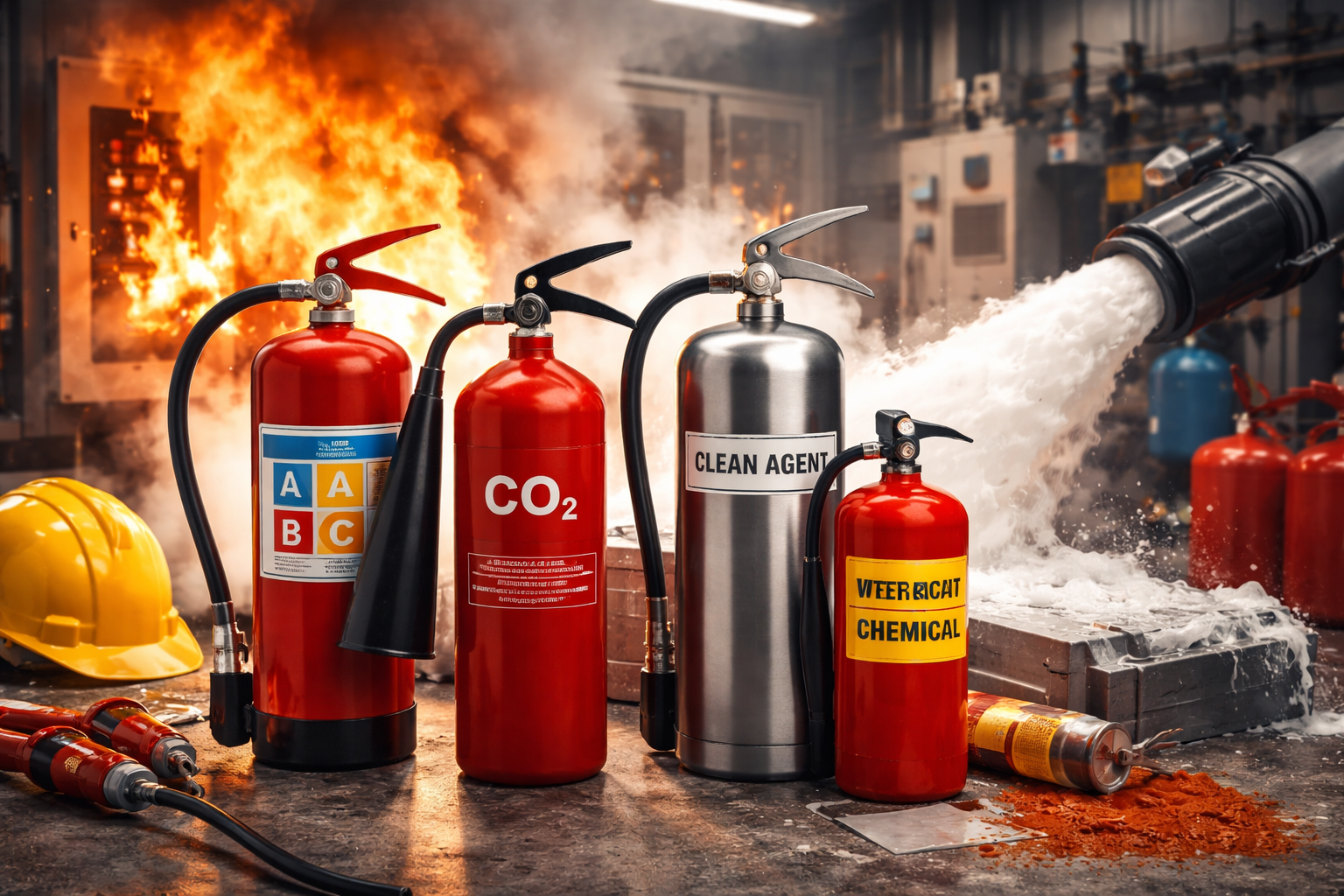
Fire safety is a fundamental responsibility for every facility manager, safety officer, and business owner. Whether you operate a manufacturing plant, laboratory, warehouse, commercial kitchen, hospital, data center, or office building, selecting the appropriate fire extinguishing agent is critical to minimizing damage, protecting occupants, and ensuring regulatory compliance.
The wrong extinguishing agent can worsen a fire, damage valuable equipment, or pose health risks. The right one can mean the difference between a minor incident and a catastrophic loss. This article explores how to select the best fire extinguishing agent for your facility by understanding fire classes, evaluating facility hazards, and comparing available suppression technologies.
Understanding Fire Classes
Before selecting an extinguishing agent, you must first understand the types of fires that may occur in your facility. Fires are classified based on the fuel involved.
- Class A – Ordinary Combustibles
Fuel sources: Wood, paper, textiles, plastics, trash
Common locations: Offices, schools, warehouses, residential buildings
Class A fires involve solid combustible materials. These are the most common fires in commercial facilities.
Best agents:- Water
- Foam
- ABC dry chemical
- Class B – Flammable Liquids and Gases
Fuel sources: Gasoline, diesel, solvents, alcohols, oil, propane
Common locations: Laboratories, fuel storage areas, workshops, chemical facilities
Water should never be used on Class B fires as it can spread the burning liquid.
Best agents:- Foam (AFFF or AR-AFFF)
- Carbon dioxide (CO₂)
- BC or ABC dry chemical
- Clean agents (FM-200, Novec 1230)
- Class C – Energized Electrical Equipment
Fuel sources: Electrical panels, servers, machinery, wiring
Common locations: Data centers, control rooms, hospitals, manufacturing plants
The extinguishing agent must be non-conductive.
Best agents:- CO₂
- Clean agents
- ABC dry chemical
- Class D – Combustible Metals
Fuel sources: Magnesium, titanium, sodium, potassium
Common locations: Metal processing plants, laboratories, aerospace facilities
These fires require specialized suppression methods.
Best agents:- Dry powder (Class D specific)
- Class K – Cooking Oils and Fats
Fuel sources: Cooking oils and animal fats
Common locations: Commercial kitchens, restaurants, food processing facilities
Best agents:- Wet chemical extinguishers (potassium acetate-based)
Key Factors in Selecting the Right Fire Extinguishing Agent
- Hazard Assessment
Conduct a detailed fire risk assessment of your facility. Identify:- Types of materials stored or used
- Ignition sources
- Electrical equipment presence
- Flammable liquid storage
- Specialized hazards (metals, commercial kitchens)
A mixed-use facility may require multiple extinguisher types.
- Occupant Safety
Some agents displace oxygen (e.g., CO₂), which can pose asphyxiation risks in confined spaces. Others may leave toxic residues or reduce visibility during discharge.
For occupied areas:- Consider clean agents for minimal residue.
- Ensure proper ventilation systems.
- Follow local safety codes.
- Equipment and Asset Protection
In environments like data centers or laboratories, water or dry chemicals may cause significant secondary damage.
For sensitive equipment areas:- Clean agents (e.g., FM-200, Novec 1230)
- CO₂ systems (with proper safety controls)
These leave no residue and minimize downtime.
- Environmental Considerations
Modern regulations increasingly restrict ozone-depleting substances and high global warming potential (GWP) agents.- Avoid outdated halon systems.
- Consider environmentally friendly clean agents.
- Evaluate long-term sustainability compliance.
- Regulatory Compliance
Compliance with standards such as:- NFPA guidelines
- OSHA regulations
- Local fire authority requirements
- Insurance provider mandates
Ensure extinguishers are correctly rated, inspected, and maintained.
Comparing Common Fire Extinguishing Agents
-
- Water
Pros: Inexpensive, effective on Class A
Cons: Conductive, ineffective on liquid fires - Foam
Pros: Excellent for flammable liquids
Cons: Can cause water damage, cleanup required - Dry Chemical
Pros: Versatile (ABC type covers multiple classes)
Cons: Leaves residue, damages electronics - Carbon Dioxide (CO₂)
Pros: No residue, safe for electronics
Cons: Limited cooling effect, asphyxiation risk - Clean Agents
Pros: No residue, safe for sensitive equipment
Cons: Higher cost - Wet Chemical
Pros: Specifically designed for kitchen grease fires
Cons: Limited application range - Dry Powder (Class D)
Pros: Essential for metal fires
Cons: Highly specialized use only
- Water
Special Considerations by Facility Type
-
-
- Office Buildings: ABC dry chemical + water-based systems
- Data Centers: Clean agents or CO₂
- Industrial Plants: Combination of foam, dry chemical, and Class D agents
- Laboratories: Clean agents + foam systems for solvents
- Restaurants: Wet chemical kitchen systems + ABC backup
-
Maintenance and Inspection
Selecting the correct agent is only the first step. Fire extinguishers must be:
-
-
- Inspected monthly
- Serviced annually
- Hydro-tested as required
- Replaced when expired
-
Improper maintenance can render even the best agent ineffective.
Conclusion
Selecting the best fire extinguishing agent for your facility is not a one-size-fits-all decision. It requires a thorough understanding of fire classifications, hazard assessment, regulatory requirements, environmental impact, and asset protection priorities.
The safest facilities use a layered approach — combining portable extinguishers, fixed suppression systems, staff training, and routine inspections. By aligning your extinguishing agent selection with your facility’s unique risk profile, you significantly reduce potential loss, protect lives, and maintain operational continuity.
Fire safety is not just about compliance — it is about preparedness, responsibility, and resilience.