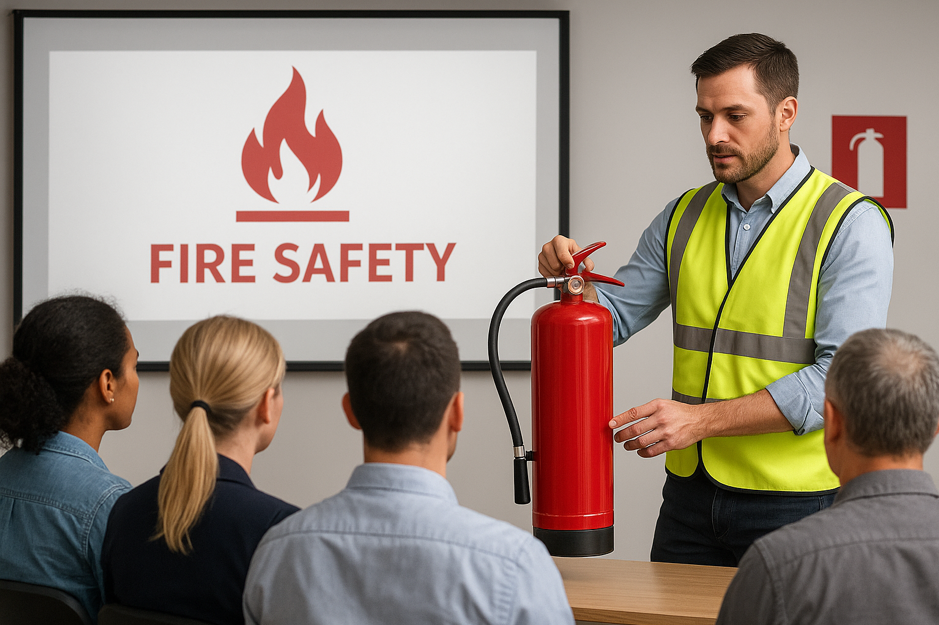
Fire safety is often thought of as a regulatory requirement—a box to tick during compliance audits. But in reality, it is much more than that. Investing in fire safety training for your employees not only reduces the risk of accidents but also strengthens the overall resilience, culture, and reputation of your business. In an environment where workplace safety is increasingly tied to operational success, fire safety training is no longer optional—it is essential.
- Protecting Lives and Assets
The most obvious and vital benefit of fire safety training is the protection of human life. When employees understand evacuation routes, the use of extinguishers, and how to remain calm during emergencies, the chances of injuries or fatalities are significantly reduced. Beyond safeguarding people, training also helps protect physical assets such as equipment, documents, and property. Quick and knowledgeable responses can prevent small incidents from escalating into devastating losses. - Meeting Legal and Regulatory Compliance
Most countries have strict workplace safety regulations that require organizations to conduct regular fire safety training and drills. Non-compliance can result in hefty fines, legal consequences, or even forced business closures. By implementing fire safety training, businesses ensure they are aligned with local laws and industry standards. This not only avoids penalties but also positions the company as a responsible, compliant organization. - Reducing Financial Losses
Fires can cause millions in damages within minutes. While insurance may cover some costs, it rarely accounts for business interruption, reputational harm, or the loss of valuable data. Employees who are well-trained in fire prevention and emergency response can help stop minor incidents from escalating, ultimately saving the business from significant financial setbacks. In this sense, fire safety training is a cost-effective investment compared to the potential losses from a single fire-related incident. - Enhancing Employee Confidence and Morale
When employees feel safe at work, they are more confident, engaged, and productive. Fire safety training empowers staff with practical knowledge—such as how to identify fire hazards, report unsafe conditions, and respond effectively if a fire occurs. This sense of preparedness fosters a workplace culture built on trust and security. Employees who know their employer prioritizes safety are more likely to remain loyal and motivated. - Building a Safety-First Culture
Fire safety training goes beyond emergency drills—it creates a mindset of awareness and responsibility. When employees are regularly reminded of fire risks and prevention techniques, they are more likely to adopt safe practices in their daily tasks, such as handling flammable materials properly, checking electrical cords, or avoiding clutter near exits. Over time, this collective awareness builds a strong safety-first culture that benefits every aspect of the business. - Minimizing Business Disruption
Even a small fire can disrupt operations, cause delays in projects, and damage client relationships. Training ensures employees know how to act swiftly, which helps contain emergencies before they spread. For example, an employee trained to use a fire extinguisher correctly can put out a small fire in seconds, preventing an evacuation, downtime, and potential shutdown of operations. This quick action helps businesses maintain continuity and minimize disruption. - Strengthening Business Reputation
Clients, partners, and stakeholders are increasingly concerned about corporate responsibility and workplace safety. A business that actively invests in fire safety training demonstrates accountability and care for its people. This commitment not only protects the company internally but also strengthens its external reputation. In competitive industries, being known as a safety-conscious business can set you apart and attract more opportunities. - Preparing for the Unexpected
Fires are unpredictable and can occur in any workplace—offices, factories, warehouses, or retail stores. Even with advanced fire detection systems and sprinklers, human response remains critical in the first few minutes of an emergency. Fire safety training equips employees with the confidence to act decisively during unpredictable situations, ensuring that chaos does not undermine safety measures.
Conclusion
Fire safety training is more than a compliance exercise—it is an investment in the protection, continuity, and long-term success of your business. From safeguarding lives and assets to boosting employee morale, reducing financial losses, and enhancing your company’s reputation, the benefits are extensive. By integrating fire safety training into your business strategy, you are not only preparing for emergencies but also building a safer, stronger, and more resilient workplace.