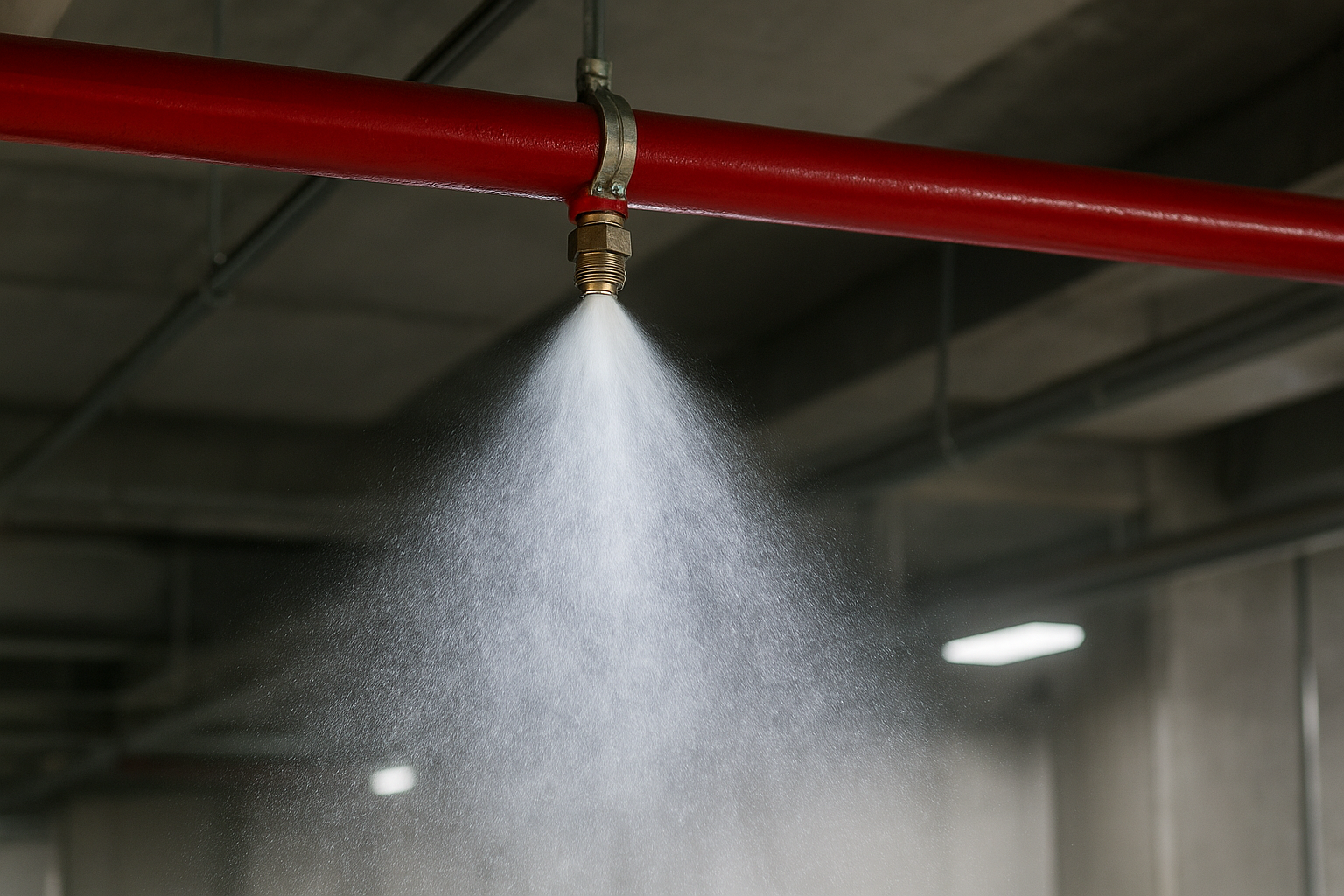
Fire protection technology has evolved dramatically over the past few decades, and one of the most innovative developments is the water mist fire suppression system. Designed to provide highly efficient fire control with minimal water usage, these systems are becoming a preferred choice for many industries and facilities. From data centers to heritage buildings, water mist systems offer a modern alternative to traditional sprinklers and chemical-based suppression systems.
What Is a Water Mist Fire Suppression System?
A water mist fire suppression system uses fine water droplets — typically less than 1,000 microns in diameter — to extinguish fires. Unlike traditional sprinkler systems that release large volumes of water, a water mist system disperses high-pressure mist through specialized nozzles, forming a cloud that absorbs heat, displaces oxygen, and cools the surrounding environment.
This process attacks the fire’s three core components — heat, oxygen, and fuel — simultaneously:
- The mist cools the flames and nearby surfaces.
- The tiny droplets displace oxygen near the fire, reducing combustion.
- The rapid heat absorption prevents re-ignition.
How It Works
Water mist systems can operate at low, medium, or high pressure, depending on the application:
- Low-pressure systems (below 12.5 bar) are ideal for spaces where delicate equipment or people are present.
- Medium-pressure systems (12.5–34.5 bar) balance performance and efficiency for general building protection.
- High-pressure systems (above 34.5 bar) create ultra-fine mist suitable for high-risk environments such as turbine enclosures or marine engine rooms.
When activated, the system’s nozzles release a controlled mist that quickly covers the fire zone. The small droplet size provides a large surface area, maximizing the cooling effect and using significantly less water compared to traditional sprinklers — often up to 80–90% less.
Advantages of Water Mist Systems
Water mist systems are increasingly popular because they combine environmental responsibility with effective fire suppression. Key advantages include:
- Reduced Water Damage
Since these systems use minimal water, they significantly reduce secondary damage to property, equipment, or sensitive materials — making them ideal for data centers, museums, and archives. - Effective on a Wide Range of Fires
Water mist can suppress both Class A (solid combustibles) and Class B (flammable liquids) fires. Its ability to rapidly cool and smother flames makes it suitable for mixed-risk areas. - Enhanced Safety
The mist is non-toxic and safe for human exposure, unlike gaseous or chemical suppression systems that require evacuation before activation. - Environmentally Friendly
Water is a clean, natural extinguishing agent. Water mist systems avoid the use of harmful chemicals or greenhouse gases such as halons or fluorocarbons. - Efficient Space Utilization
Because of the high-pressure technology and smaller piping requirements, water mist systems require less space than traditional sprinkler systems. This is beneficial for retrofitting older buildings or tight installations.
Applications of Water Mist Fire Suppression
Water mist systems are used across a variety of sectors, including:
- Commercial Buildings: Offices, hotels, hospitals, and high-rise complexes where occupant safety and reduced water damage are priorities.
- Industrial Facilities: Turbines, manufacturing plants, and machinery spaces that need fast and localized fire suppression.
- Marine and Offshore: Engine rooms, cargo spaces, and accommodation areas on ships benefit from the lightweight and non-toxic nature of water mist.
- Cultural Heritage Sites: Museums, archives, and historic buildings use water mist systems to protect irreplaceable assets without risking water or chemical damage.
- Transportation: Tunnels, train compartments, and airport facilities employ mist systems for quick, wide-area coverage with minimal visibility impact.
Installation and Maintenance Considerations
A properly designed and installed system is essential for optimal performance. Factors such as droplet size, nozzle placement, water pressure, and ventilation must be carefully calibrated for the specific environment.
Routine maintenance and testing are also crucial. Inspections typically include checking nozzle condition, verifying pressure levels, and ensuring there is no obstruction in the piping network. Regular servicing ensures reliability in case of an emergency and compliance with safety regulations.
Standards and Certification
Water mist systems are governed by international standards such as:
- NFPA 750 (National Fire Protection Association – Standard on Water Mist Fire Protection Systems)
- FM Approvals and UL Listings for performance and reliability testing
Compliance with these standards ensures that the system performs effectively under real fire conditions.
The Future of Fire Suppression
As industries increasingly prioritize sustainability and asset protection, water mist fire suppression systems represent a step toward cleaner, safer, and more efficient fire control. With ongoing advancements in nozzle technology, pump systems, and design standards, these systems are expected to play a vital role in the next generation of fire safety solutions.
Conclusion
Water mist fire suppression systems offer an intelligent blend of safety, efficiency, and environmental care. By using minimal water and providing effective fire control across various applications, they are redefining how we protect lives, assets, and the environment. Whether for a modern data center, a historical landmark, or an industrial facility, water mist systems provide reliable protection with minimal compromise.