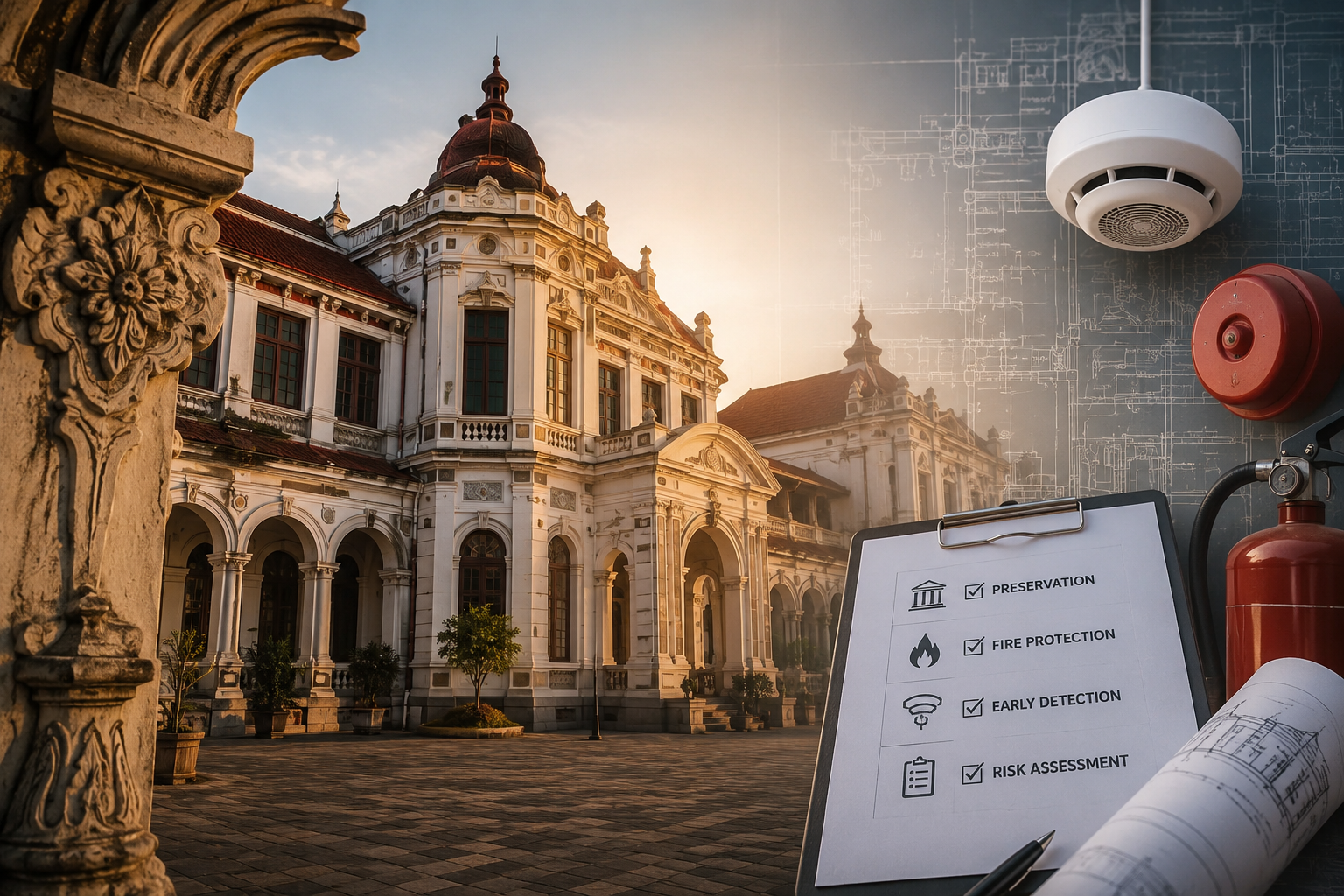
Historical buildings are irreplaceable cultural assets that reflect a nation’s architectural heritage, traditions, and identity. In Indonesia, centuries-old temples, colonial-era buildings, traditional palaces, mosques, churches, and heritage houses represent an important part of the country’s history. However, these buildings are often more vulnerable to fire than modern structures due to aging materials, outdated electrical systems, and the challenge of integrating modern fire protection technologies without compromising their historical value.
Balancing heritage preservation with effective fire safety requires specialized strategies that respect the building’s authenticity while minimizing fire risks.
Why Historical Buildings Face Greater Fire Risks
Many heritage structures were built long before modern fire safety standards existed. As a result, they present unique challenges that increase both the likelihood of fire and the potential severity of damage.
Common risk factors include:
- Timber structural elements and combustible interior finishes
- Aging electrical wiring and overloaded circuits
- Lack of compartmentation that allows fire to spread rapidly
- Hidden voids within ceilings, roofs, and walls
- Limited escape routes for occupants
- Difficult access for firefighting operations
- Restrictions on altering the building’s original architecture
Unlike modern buildings, installing new piping, cabling, or fire barriers often requires approval from heritage conservation authorities.
Fire Protection Challenges in Heritage Conservation
Protecting historical buildings involves more than simply complying with fire codes. Every intervention must preserve the building’s cultural significance.
Major challenges include:
- Maintaining Architectural Authenticity
Visible fire protection equipment can alter the historical appearance of interiors and exteriors. Large pipes, exposed conduits, or bulky detectors may conflict with conservation objectives. - Preventing Damage During Installation
Drilling into ancient stone, carved wood, or decorative plaster may permanently damage original construction materials. - Protecting Irreplaceable Artifacts
Museums, churches, archives, and heritage buildings often contain manuscripts, paintings, sculptures, and historical documents that require additional protection beyond the building itself. - Limited Structural Capacity
Older structures may not support the weight of large water tanks or extensive sprinkler piping without structural reinforcement.
Modern Fire Detection Solutions for Historical Buildings
Early detection is one of the most effective ways to reduce fire damage in heritage buildings.
Several technologies are particularly suitable because they require minimal intervention.
Aspirating Smoke Detection (ASD)
Aspirating smoke detection systems continuously draw air through small sampling pipes, enabling extremely early smoke detection before visible smoke develops.
Advantages include:
- Very early warning
- Small, discreet sampling points
- Minimal visual impact
- Suitable for high ceilings and large halls
- Ideal for museums, churches, libraries, and galleries
Wireless Fire Detection Systems
Wireless detectors eliminate the need for extensive cabling, reducing installation work and preserving historic finishes.
Benefits include:
- Minimal drilling
- Faster installation
- Easier future modifications
- Lower impact on heritage structures
Beam Smoke Detectors
Large heritage spaces such as cathedral halls, museums, and palace galleries often benefit from beam detectors that monitor long distances with minimal equipment.
Choosing Fire Suppression Systems Carefully
While automatic suppression is essential, traditional sprinkler systems may not always be appropriate for heritage buildings.
Selection depends on the building’s construction, occupancy, and the value of its contents.
Traditional Wet Sprinkler Systems
Suitable where water damage presents relatively low risk.
Advantages include:
- Proven reliability
- High fire control capability
- Widely accepted by fire codes
Potential concerns:
- Water damage to artwork
- Damage to historical timber
- Extensive pipe installation
Water Mist Systems
Water mist technology uses significantly less water while maintaining excellent cooling performance.
Benefits include:
- Reduced water damage
- Smaller pipe sizes
- Less structural loading
- Effective for protecting valuable interiors
Water mist has become an increasingly popular solution for heritage preservation projects because it balances fire suppression performance with conservation needs.
Clean Agent Fire Suppression
Archives, museums, and document storage rooms often require clean agent systems.
Advantages include:
- No water damage
- No residue after discharge
- Safe for sensitive electronics
- Suitable for valuable collections
Clean agents are especially useful for protecting rare manuscripts, historical archives, and museum collections.
Electrical Fire Prevention
Many fires in historical buildings originate from electrical failures rather than open flames.
Preventive measures include:
- Replacing deteriorated wiring
- Inspecting electrical panels regularly
- Installing Arc Fault Detection Devices (AFDD) where appropriate
- Monitoring electrical loads
- Using thermal imaging inspections to detect overheating components
Routine electrical maintenance significantly reduces ignition risks while preserving building integrity.
Fire Risk Assessment Is Essential
Each historical building has unique construction methods, occupancy patterns, and conservation requirements. A comprehensive fire risk assessment helps identify vulnerabilities before incidents occur.
A typical assessment includes:
- Building construction evaluation
- Identification of ignition sources
- Occupancy analysis
- Emergency evacuation planning
- Fire compartment review
- Detection system assessment
- Suppression system evaluation
- Maintenance planning
The assessment should also consider conservation priorities so that fire protection measures align with heritage preservation goals.
Fire Safety Management Beyond Technology
Technology alone cannot protect historical buildings. Effective management practices are equally important.
Key measures include:
- Regular fire drills for staff and occupants
- Routine inspection of fire protection systems
- Housekeeping to reduce combustible materials
- Strict control of hot work activities
- Visitor management during crowded events
- Emergency response planning with local fire departments
Proper documentation ensures maintenance activities do not unintentionally damage heritage features.
Historical Building Fire Protection in Indonesia
Indonesia is home to numerous heritage sites that require specialized fire protection approaches. Historic structures range from Dutch colonial buildings in Jakarta, Semarang, and Surabaya to traditional palaces, museums, and centuries-old places of worship.
The country’s tropical climate introduces additional challenges, including high humidity that can affect electrical systems and detection equipment, as well as heavy rainfall that may impact maintenance activities. Many heritage buildings are also constructed with timber or other combustible materials, increasing the importance of early fire detection and preventive maintenance.
Several notable fire incidents involving heritage structures in Indonesia have highlighted the need for proactive fire safety planning. Protecting these buildings requires collaboration among conservation experts, engineers, building owners, and local authorities to ensure that safety upgrades respect historical authenticity while meeting modern fire protection standards.
As heritage tourism continues to grow, investing in fire protection becomes essential not only to safeguard visitors but also to preserve cultural landmarks for future generations.
Balancing Preservation and Protection
Fire protection for historical buildings requires a careful balance between preserving cultural heritage and ensuring modern safety standards. Through thoughtful risk assessments, early detection technologies, appropriately selected suppression systems, and proactive maintenance, it is possible to significantly reduce fire risks without compromising historical integrity.
For Indonesia’s rich collection of heritage buildings, integrating conservation principles with advanced fire protection strategies is a critical step toward ensuring these irreplaceable landmarks remain protected and accessible for generations to come.