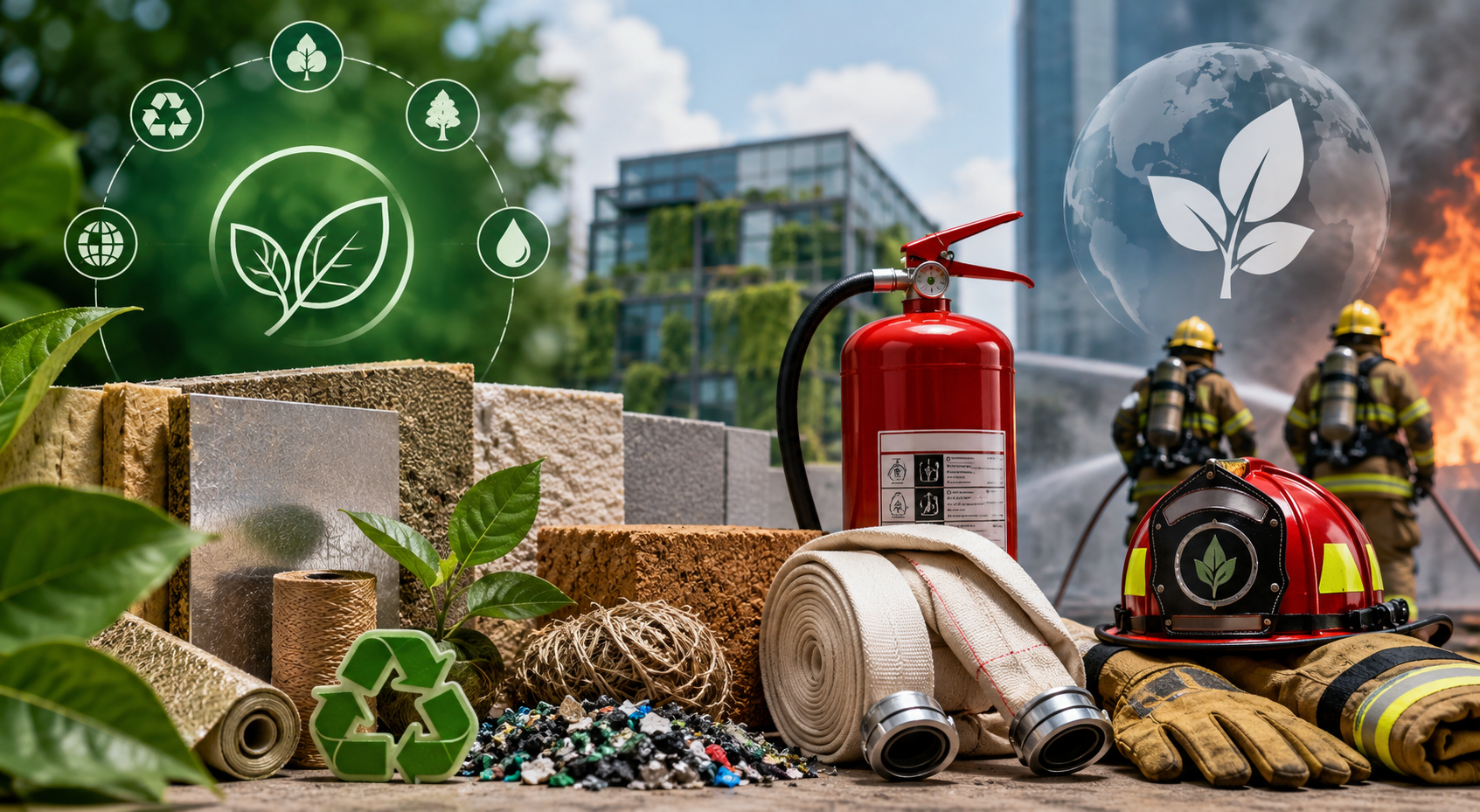
Fire safety equipment is essential for protecting lives, buildings, and critical infrastructure from fire-related hazards. However, the production of traditional fire safety products often relies on resource-intensive materials such as synthetic plastics, chemical-based flame retardants, and energy-heavy manufacturing processes. As sustainability becomes a growing priority across industries, manufacturers are increasingly exploring eco-conscious materials that can provide effective fire protection while reducing environmental impacts.
The shift toward greener fire safety solutions reflects a broader effort to balance public safety with environmental responsibility. By incorporating recycled, renewable, and less toxic materials, the industry is beginning to reduce its ecological footprint without compromising performance.
Sustainable Materials Transforming Fire Safety Equipment
One of the most significant developments in the industry is the adoption of sustainable materials in the manufacturing of fire safety equipment. Recycled metals such as steel and aluminum are increasingly used in fire extinguishers, sprinkler systems, and equipment cabinets, helping reduce the demand for raw material extraction and lowering energy consumption during production.
Manufacturers are also integrating recycled plastics into protective casings, storage units, and other non-critical components. These materials help divert waste from landfills while decreasing dependence on virgin petroleum-based resources.
Alongside recycled materials, bio-based alternatives are gaining attention. Natural fibers such as hemp, flax, bamboo, and jute can be incorporated into composite materials that offer strength, durability, and reduced environmental impact. Although these materials require specialized treatments to improve fire resistance, ongoing research continues to expand their potential applications within the fire safety sector.
Greener Approaches to Fire Protection
Sustainability in fire safety extends beyond the physical materials used in equipment. Researchers and manufacturers are also developing environmentally friendly alternatives to conventional flame retardants and fire suppression agents.
Traditional flame retardants have raised concerns due to their persistence in the environment and potential health impacts. As a result, mineral-based solutions such as aluminum hydroxide, magnesium hydroxide, and expandable graphite are becoming increasingly attractive options. These materials can effectively slow the spread of fire while reducing environmental risks.
Similarly, firefighting technologies are evolving. PFAS-free firefighting foams are replacing older formulations that have been associated with long-term environmental contamination. Water mist systems are also gaining popularity because they suppress fires efficiently while using significantly less water than conventional systems, reducing both resource consumption and water damage.
Benefits of Eco-Conscious Fire Safety Equipment
The adoption of sustainable materials and technologies offers several advantages. Environmentally responsible fire safety equipment can help lower greenhouse gas emissions, reduce waste generation, and decrease reliance on finite natural resources. Many eco-conscious materials are also recyclable, supporting circular economy principles and extending the useful life of valuable resources.
From a business perspective, sustainable fire safety products can contribute to corporate environmental goals, improve regulatory compliance, and enhance an organization’s sustainability profile. As environmental regulations become stricter worldwide, companies that invest in greener solutions may gain long-term economic and operational advantages.
Importantly, modern eco-conscious fire safety equipment is designed to meet the same rigorous safety standards as conventional products, ensuring that environmental benefits do not come at the expense of performance.
Challenges and Future Outlook
Despite growing interest, the widespread adoption of eco-conscious materials in fire safety equipment faces several challenges. New materials must undergo extensive testing and certification to ensure compliance with strict fire safety regulations. Sustainable alternatives can also be more expensive than conventional options, particularly during the early stages of market adoption.
Nevertheless, continued investment in research and innovation is driving progress. Advances in recyclable polymers, bio-based composites, sustainable flame retardants, and circular manufacturing processes are creating new opportunities for environmentally responsible fire protection.
As industries seek solutions that address both safety and sustainability, eco-conscious materials are likely to play an increasingly important role in the future of fire safety equipment.
Conclusion
The fire safety industry is gradually embracing sustainability through the adoption of recycled materials, renewable resources, environmentally friendly flame retardants, and greener suppression technologies. These innovations demonstrate that effective fire protection and environmental responsibility can go hand in hand.
While challenges related to cost, certification, and scalability remain, ongoing technological advancements are making sustainable fire safety solutions more practical and accessible. By integrating eco-conscious materials into the design and manufacture of fire safety equipment, the industry can help create a safer future not only for people and property but also for the environment.