Fire protection systems are a fundamental component of building safety and risk management. They are designed to detect, control, and extinguish fires before they grow into catastrophic events. Among the most widely used fire suppression technologies are chemical suppression systems and water-based suppression systems. While both aim to control and extinguish fires, they differ significantly in their extinguishing mechanisms, applications, environmental impact, maintenance requirements, and cost considerations. Understanding these differences is essential for engineers, building managers, and safety professionals when selecting the most suitable system for a specific environment.
Overview of Fire Suppression Systems
Fire suppression systems are engineered solutions that automatically or manually release extinguishing agents to control or extinguish fires. Their purpose is not only to protect human life but also to minimize damage to property, equipment, and infrastructure.
Two major categories dominate modern fire protection:
- Water-based suppression systems, such as sprinkler systems and water mist systems.
- Chemical suppression systems, including clean agent systems, dry chemical systems, and foam-based systems.
Each system type operates on different scientific principles and is suited for particular types of fire hazards.
Water-Based Fire Suppression Systems
- How Water-Based Systems Work
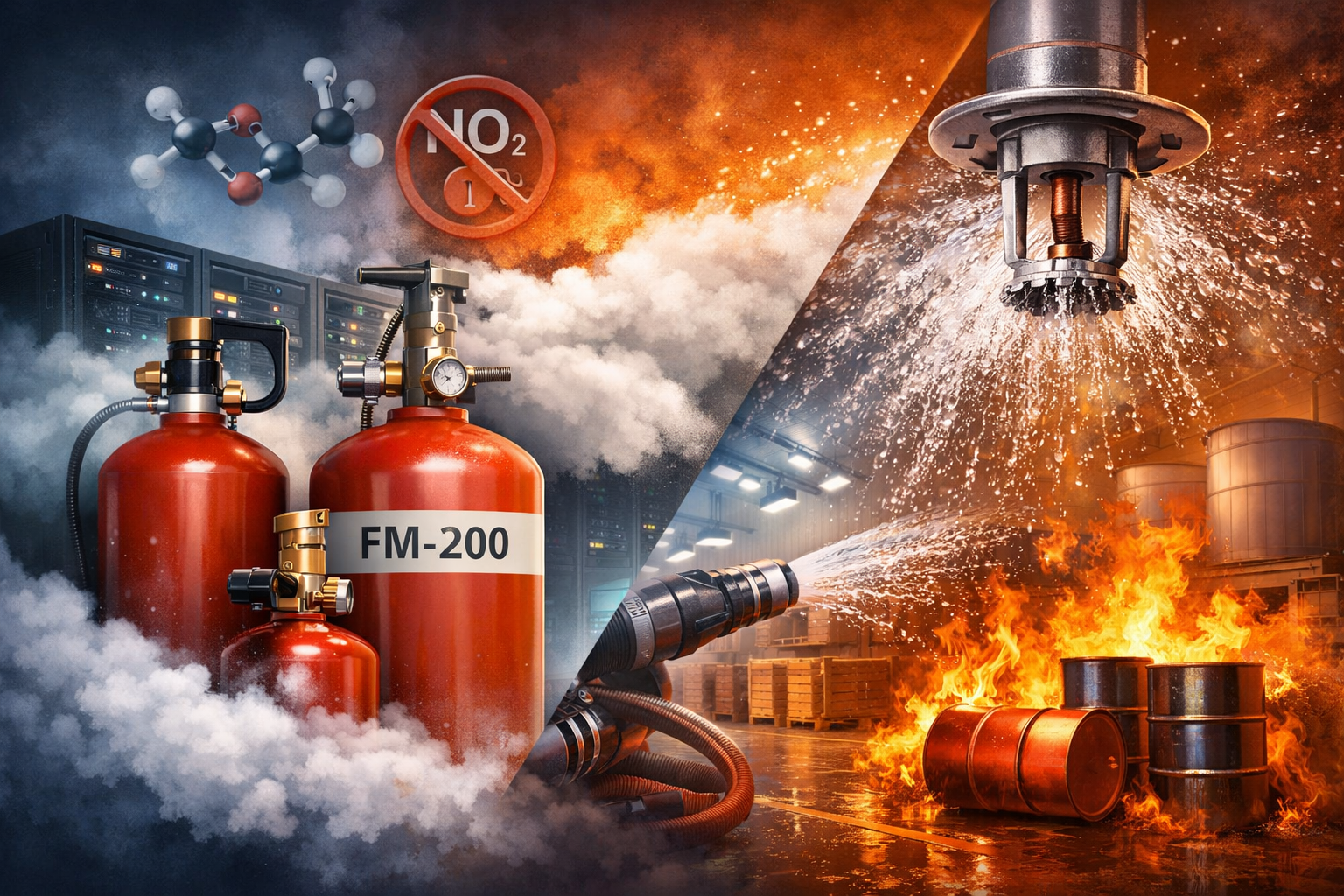
Water-based fire suppression systems primarily extinguish fires through cooling. When water is discharged onto a fire, it absorbs heat energy and lowers the temperature of the burning material below its ignition point. This interrupts the combustion process and prevents the fire from spreading.
The most common water-based system is the automatic sprinkler system, which activates when heat from a fire triggers a thermal element within the sprinkler head. Once activated, water is released directly onto the fire source.
Another modern variation is the water mist system, which releases very fine droplets of water. These droplets evaporate quickly, absorbing heat and displacing oxygen around the fire, which helps suppress combustion more efficiently than traditional sprinklers in certain environments. - Advantages of Water-Based Systems
Water-based systems offer several advantages that make them widely used in residential, commercial, and industrial buildings:- High reliability
Automatic sprinkler systems have been used for over a century and are known for their dependable performance. - Cost-effectiveness
Water is inexpensive and readily available, making these systems relatively affordable to install and maintain. - Effective for common fires
Water is highly effective against Class A fires, which involve ordinary combustible materials such as wood, paper, textiles, and plastics. - Broad regulatory acceptance
Building codes and fire safety regulations around the world commonly require sprinkler systems in many types of buildings.
- High reliability
- Limitations of Water-Based Systems
Despite their advantages, water-based suppression systems are not suitable for every environment.- Potential equipment damage
Water can damage electronics, sensitive machinery, documents, and artwork. - Unsuitable for certain fire types
Water can be dangerous or ineffective for Class B fires (flammable liquids) and Class C fires (electrical equipment). - Large water supply requirement
These systems require substantial water storage or connection to a reliable water supply network. - Risk of water damage
Even when the fire is successfully extinguished, water discharge can cause secondary damage to building contents.
- Potential equipment damage
Chemical Fire Suppression Systems
- How Chemical Systems Work
Chemical suppression systems extinguish fires using specialized chemical agents instead of water. These agents suppress fire through mechanisms such as:- Interrupting the chemical reaction of combustion
- Smothering the fire by removing oxygen
- Absorbing heat
Different chemical agents are used depending on the hazard involved.
Common chemical suppression systems include:- Clean agent systems
These systems use gases such as FM-200, Novec 1230, or inert gas blends. They suppress fire without leaving residue, making them ideal for protecting sensitive equipment. - Dry chemical systems
These systems release powders that interrupt the chemical chain reaction of combustion. They are commonly used in industrial settings. - Foam suppression systems
Foam systems create a blanket over flammable liquids, separating the fuel from oxygen and preventing ignition.
- Advantages of Chemical Suppression Systems
Chemical suppression systems offer several important benefits:- Protection of sensitive equipment
Clean agent systems leave no residue, making them ideal for data centers, server rooms, laboratories, and telecommunications facilities. - Rapid fire suppression
Chemical agents often extinguish fires faster than water systems because they disrupt combustion at the molecular level. - Minimal cleanup
Unlike water or powder-based extinguishers, clean agents evaporate after discharge. - Effective for multiple fire classes
Certain chemical agents are effective against Class A, B, and C fires, making them versatile.
- Protection of sensitive equipment
- Limitations of Chemical Systems
However, chemical suppression systems also have drawbacks:- Higher installation costs
The specialized equipment and agents required can be significantly more expensive than traditional sprinkler systems. - Storage requirements
Chemical agents must be stored in pressurized cylinders, requiring space and structural considerations. - Potential environmental concerns
Some older agents, such as Halon, were phased out due to ozone depletion concerns. - System refilling after discharge
Once deployed, the system must be refilled before it can operate again.
- Higher installation costs
Key Differences Between Chemical and Water-Based Systems
The fundamental differences between chemical suppression and water-based systems can be summarized across several key factors.
- Extinguishing Method
Water-based systems primarily extinguish fires by cooling the fuel and reducing heat, while chemical systems typically work by interrupting the chemical combustion reaction or displacing oxygen. - Suitable Fire Types
Water systems are most effective for Class A fires, involving common combustibles. Chemical systems are more versatile and can handle flammable liquids, electrical fires, and specialized industrial hazards. - Impact on Equipment
Water systems can cause significant damage to electronics and sensitive materials, while clean agent chemical systems are designed specifically to protect such environments without leaving residue. - Installation and Cost
Water-based systems generally have lower installation and operating costs, while chemical systems require specialized equipment, detection systems, and storage cylinders, increasing their overall cost. - Environmental and Safety Considerations
Modern chemical suppression agents are designed to be environmentally friendly and safe for occupied spaces, but they still require careful system design and ventilation considerations.
Water, by contrast, is naturally environmentally safe but can cause flooding and structural damage if discharged in large volumes.
Typical Applications
Because of their differences, each system type is used in environments where it performs best.
Water-Based Systems
- Residential buildings
- Office complexes
- Hotels and hospitals
- Warehouses
- Retail stores
- Schools and universities
Chemical Suppression Systems
- Data centers
- Server rooms
- Electrical control rooms
- Museums and archives
- Laboratories
- Industrial machinery areas
- Commercial kitchens (using wet chemical systems)
Often, modern facilities use a combination of both systems, deploying sprinklers for general building protection and chemical systems for critical equipment areas.
Choosing the Right Fire Suppression System
Selecting the appropriate suppression system requires evaluating several factors:
- Type of fire hazards present
- Sensitivity of equipment or materials
- Building design and occupancy
- Environmental regulations
- Budget and maintenance capabilities
A comprehensive fire risk assessment is typically conducted by fire protection engineers to determine the optimal suppression strategy.
Conclusion
Chemical suppression systems and water-based suppression systems serve the same fundamental purpose—extinguishing fires and protecting lives and property—but they achieve this goal through different mechanisms and technologies.
Water-based systems are cost-effective, reliable, and widely used, making them suitable for general building protection. Chemical suppression systems, on the other hand, provide specialized protection for sensitive environments and complex fire hazards where water could cause more harm than good.
In modern fire safety design, the choice is rarely about which system is better overall. Instead, the key lies in selecting the right system for the specific risk environment, ensuring that fire protection strategies effectively balance safety, cost, and operational needs.