Laboratories that handle flammable materials operate in environments where a single spark, static discharge, or procedural lapse can escalate into a major fire emergency. Whether in academic institutions, industrial research facilities, healthcare laboratories, or chemical manufacturing plants, the presence of volatile solvents, combustible gases, and reactive compounds demands a comprehensive and proactive fire safety strategy.
This article explores essential fire safety measures for laboratories handling flammable materials, covering risk assessment, facility design, storage practices, operational controls, emergency preparedness, and regulatory compliance.
Understanding the Risks in Flammable Material Laboratories
Flammable materials commonly found in laboratories include:
- Organic solvents (e.g., ethanol, acetone, hexane)
- Compressed flammable gases (e.g., hydrogen, methane)
- Reactive chemicals that emit flammable vapors
- Dust-producing powders capable of combustion
The fire triangle—fuel, oxygen, and ignition source—exists readily in laboratory settings. Electrical equipment, open flames, hot plates, static electricity, and mechanical sparks can serve as ignition sources. Effective fire safety measures aim to eliminate or control one or more elements of this triangle.
- Comprehensive Risk Assessment
Before implementing safety controls, laboratories must conduct detailed risk assessments to identify:- Types and quantities of flammable materials
- Flash points and vapor densities
- Potential ignition sources
- Storage compatibility issues
- Ventilation effectiveness
- Emergency response capabilities
Risk assessments should be updated regularly, particularly when new chemicals, processes, or equipment are introduced.
- Laboratory Design and Engineering Controls
Proper Ventilation Systems
Adequate ventilation is critical for preventing vapor accumulation. Key features include:- Certified chemical fume hoods
- Explosion-proof exhaust systems
- Continuous airflow monitoring
- Negative pressure laboratory design
Flammable vapors are often heavier than air and can accumulate near floors. Ventilation systems should account for vapor density and ensure proper air exchange rates.
Explosion-Proof Electrical Equipment
Electrical fixtures, outlets, and switches in areas handling flammable vapors must be rated for hazardous locations. Spark-resistant motors and sealed lighting fixtures reduce ignition risks.
Fire-Resistant Construction
Laboratories should incorporate:- Fire-rated walls and doors
- Automatic fire dampers
- Self-closing fire doors
- Fire-resistant laboratory furniture
These features help contain fires and limit their spread.
- Safe Storage of Flammable Materials
Flammable Storage Cabinets
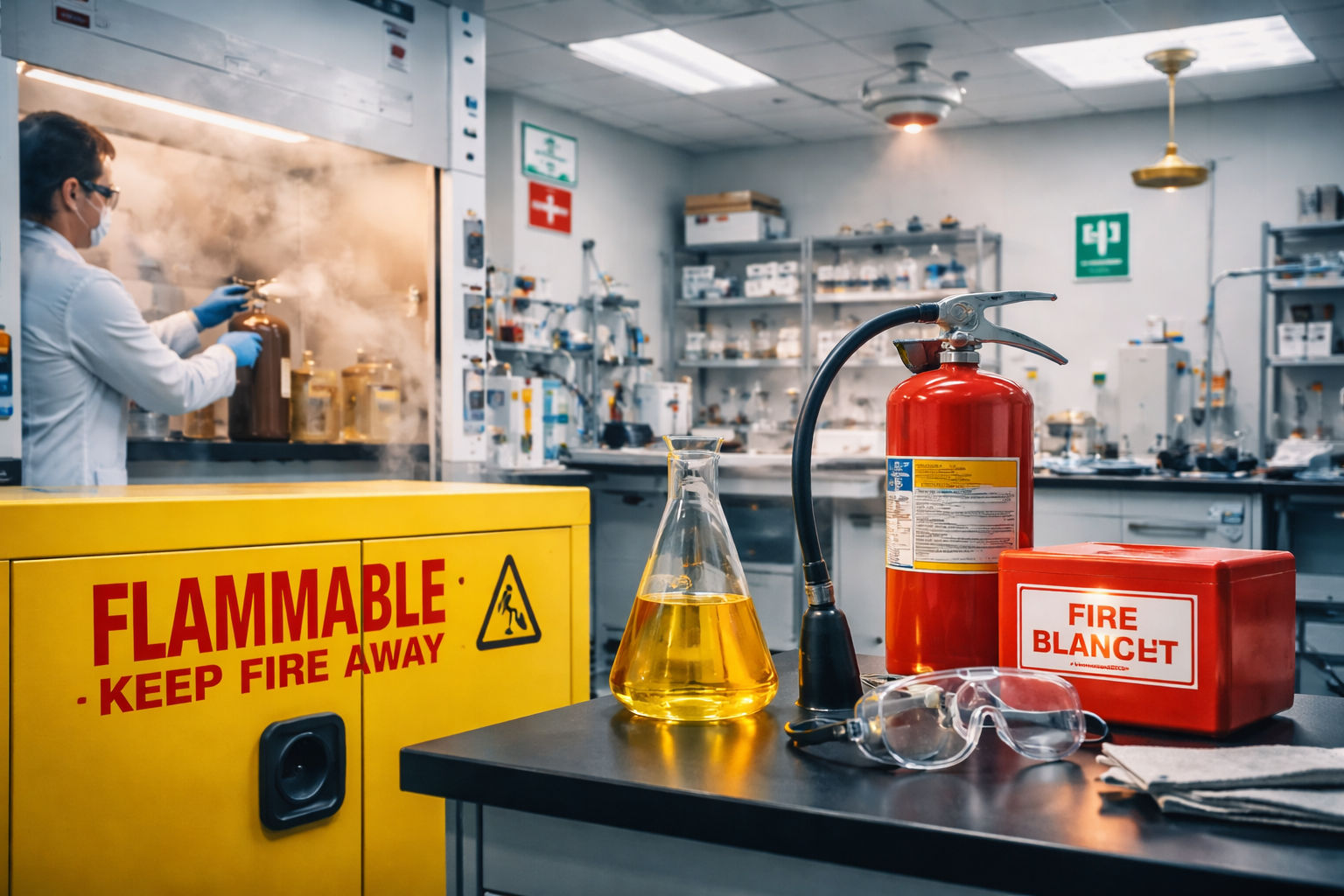
Flammable liquids must be stored in approved, clearly labeled cabinets designed to withstand fire exposure for a specified duration. Cabinets should:- Be constructed of double-walled steel
- Have self-closing doors
- Include flame arresters
- Be grounded to prevent static buildup
Quantity Control
Limit the amount of flammable materials stored outside cabinets to the minimum necessary for immediate work. Bulk storage should be separated from active work areas.
Segregation of Incompatible Chemicals
Flammable substances must not be stored with oxidizers or reactive chemicals that could intensify combustion. Compatibility charts should guide storage arrangements. - Safe Handling and Operational Practices
Elimination of Ignition Sources- Prohibit open flames unless strictly necessary
- Replace Bunsen burners with electric heating mantles when possible
- Use anti-static flooring and grounding straps
- Avoid using personal electronic devices near flammable vapors
Proper Transfer Techniques
When transferring flammable liquids:- Use bonding and grounding cables
- Employ safety cans with flame arresters
- Conduct transfers inside fume hoods
Static electricity is a common but often overlooked ignition source.
Housekeeping and Spill Prevention- Clean spills immediately using approved absorbents
- Dispose of waste solvents in fire-resistant containers
- Avoid clutter that can fuel fire spread
- Keep exits unobstructed at all times
- Fire Detection and Suppression Systems
Automatic Fire Detection
Laboratories should be equipped with:- Smoke detectors
- Heat detectors
- Flame detectors (where appropriate)
- Integrated alarm systems
Early detection dramatically reduces damage and injury risk.
Fire Suppression Systems
Common fire suppression solutions include:- Automatic sprinkler systems
- Clean agent suppression systems (for sensitive equipment)
- CO₂ or dry chemical fire extinguishers
- Fire blankets for small bench-top fires
Extinguishers must be properly rated (Class B for flammable liquids) and easily accessible.
- Emergency Preparedness and Training
Fire Safety Training
All laboratory personnel must receive regular training on:- Chemical hazard recognition
- Fire extinguisher use (PASS method: Pull, Aim, Squeeze, Sweep)
- Emergency evacuation routes
- Spill response procedures
Training should be documented and refreshed annually.
Emergency Action Plans
Every laboratory must maintain a written emergency action plan outlining:- Evacuation procedures
- Assembly points
- Roles and responsibilities
- Emergency contact numbers
- Coordination with local fire departments
Drills should be conducted periodically to ensure readiness.
- Personal Protective Equipment (PPE)
While PPE does not prevent fires, it reduces injury severity. Essential PPE includes:- Flame-resistant lab coats
- Safety goggles or face shields
- Chemical-resistant gloves
- Anti-static footwear
In high-risk environments, additional flame-retardant clothing may be required.
- Regulatory Compliance and Standards
Laboratories handling flammable materials must comply with applicable standards and codes such as:- NFPA (National Fire Protection Association) guidelines
- OSHA laboratory safety regulations
- Local building and fire codes
- International Fire Code (IFC)
Regular inspections and audits help ensure ongoing compliance and identify improvement opportunities.
- Maintenance and Continuous Improvement
Fire safety is not a one-time implementation but an ongoing process. Laboratories should:- Inspect fire extinguishers monthly
- Test alarm systems regularly
- Calibrate gas detection systems
- Maintain ventilation performance logs
- Review incident reports and near-miss events
Continuous improvement strengthens the overall safety culture.
Conclusion
Laboratories handling flammable materials present inherent fire risks that require meticulous planning, disciplined procedures, and engineered safeguards. By integrating robust design features, safe storage practices, strict operational controls, effective detection and suppression systems, and comprehensive training programs, laboratories can significantly reduce the likelihood and impact of fire incidents.
A strong fire safety culture—supported by leadership commitment and regulatory compliance—is the foundation for protecting personnel, property, research integrity, and surrounding communities.
Effective fire safety is not merely a regulatory requirement; it is an essential component of responsible laboratory management.