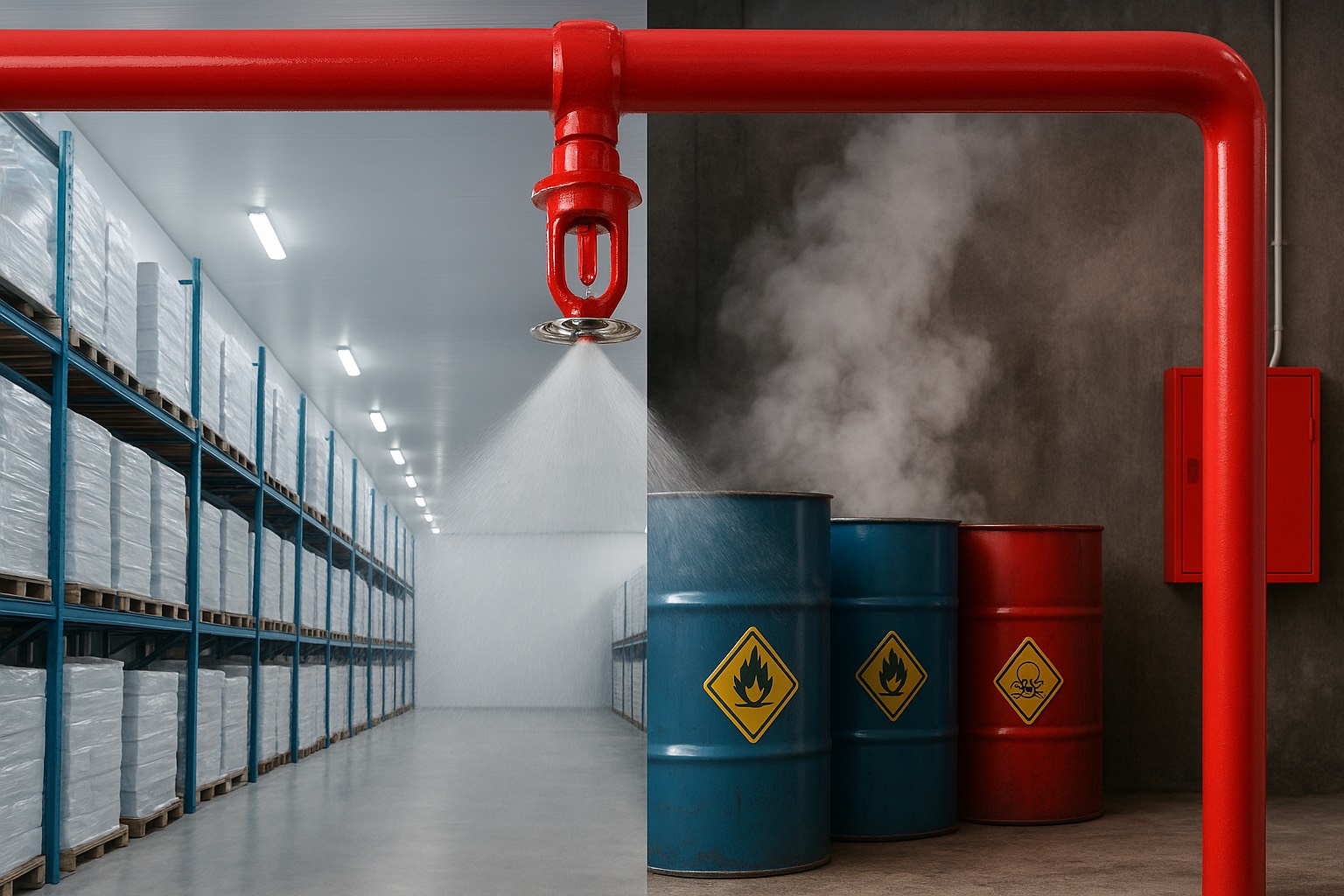
Fire safety is a universal requirement across all industries—but not all environments behave the same during a fire. Cold storage warehouses, hazardous material facilities, data centers, chemical plants, and specialized manufacturing areas each present a distinct set of fire risks that require tailored protection strategies. Traditional fire suppression systems alone are often not enough. To truly safeguard people, assets, and continuity of operations, fire protection must be engineered around the unique conditions of these environments.
This article explores the specific challenges and the most effective fire protection solutions for unique and high-risk spaces, with a focus on cold storage and hazardous material facilities.
Understanding the Unique Challenges
- Cold Storage Facilities
Cold storage warehouses operate at extremely low temperatures ranging from –18°C to –40°C. These conditions create several fire protection challenges:- Ice buildup can block sprinkler heads and pipes.
- Low humidity allows static electricity to accumulate, increasing ignition risk.
- Tight sealed construction traps heat and smoke if a fire starts.
- Insulation materials, especially older polyurethane foam, can be highly combustible.
Because of these factors, cold storage fires burn intensely and can spread quickly despite the low-temperature environment.
- Hazardous Material Facilities
Facilities handling flammable liquids, explosive chemicals, toxic gases, or reactive materials face even more complex risks:- Materials may ignite with small sparks or react violently when exposed to air or water.
- Vapors can accumulate and lead to flash fires or explosions.
- Storage containers may fail at high temperatures, releasing more fuel into the fire.
- Incompatible chemicals stored too close together can create catastrophic chain reactions.
Fire protection here must not only extinguish flames—but also prevent chemical instability, explosions, and toxic releases.
Key Fire Risks in Specialized Environments
Cold Storage
- Electrical faults from refrigeration units
- Hot work (welding, repairs) inside cold rooms
- Faulty insulation or aging materials
- Static discharge
Hazardous Materials
- Flammable liquid spills
- Chemical reactions
- Gas leaks or vapor clouds
- High-pressure containers exploding
Understanding these risks allows fire engineers to select the correct suppression strategy.
Fire Protection Solutions for Cold Storage
- Dry Pipe Sprinkler Systems
Traditional wet systems freeze in cold environments, so dry pipe systems are the standard.
Features:- Pipes are filled with pressurized air or nitrogen, not water.
- Water is released only when the sprinkler activates.
- Prevents pipe freeze and ice blockage.
- Pre-Action Systems
Ideal for high-value frozen goods or facilities requiring extra protection.How it works:- Detection system confirms a fire.
- Control panel opens valve.
- Water flows into pipes ONLY when sprinkler heads activate.
This double-interlock reduces accidental discharge.
- Early Suppression Fast Response (ESFR) Sprinklers
ESFR sprinklers produce larger droplets at high velocity, perfect for penetrating the intense fires typical in cold storage.
Benefits:- Designed for high-challenge storage fires
- Protects racking systems without in-rack sprinklers
- Activates quickly and suppresses early
- Special Consideration: Insulated Panel Safety
Facilities should use non-combustible insulation, maintain airtight seals, and routinely inspect for damage.
Fire Protection Solutions for Hazardous Materials Facilities
- Foam Suppression Systems
Foam is the most effective method for controlling flammable liquid fires.
Types of foam:- AFFF (Aqueous Film Forming Foam) – best for fuel-based fires
- Alcohol-resistant foam – suitable for polar solvents
- High-expansion foam – ideal for confined areas
Foam suppresses fire by creating a barrier that prevents oxygen from reaching the fuel.
- Gas-Based Suppression (Clean Agents)
Perfect for chemical storage where water may cause a reaction.
Common clean agent solutions:- FM-200
- NOVEC 1230
- CO₂ systems (for unoccupied areas only)
These systems extinguish fire by absorbing heat or reducing oxygen—not by using water.
- Explosion Protection Systems
For environments with flammable gases or combustible dusts:- Explosion vents relieve pressure safely
- Explosion suppression panels release inert agents instantly
- Flame arrestors stop flames from propagating through pipes
- Hazardous Material Segregation
Proper storage design is essential:- Separate incompatible chemicals
- Use fire-rated rooms or cabinets
- Install spill containment trays
- Ensure proper ventilation to prevent vapor buildup
Detection Systems for High-Risk Environments
- Aspirating Smoke Detection (ASD)
Highly sensitive and works well in cold storage where smoke movement is limited. - Flame Detectors
Used in chemical plants and fuel storage areas due to rapid reaction time and the ability to detect:- Infrared radiation
- Ultraviolet radiation
- Visible flame signatures
- Gas Detection
Monitors vapor concentration and can trigger alarms or shutdowns before ignition occurs.
Examples:- VOC detectors
- Flammable gas sensors
- Toxic gas sensors
Fire Safety Best Practices for Specialized Facilities
- Conduct regular risk assessments
- Train staff in chemical handling and emergency response
- Implement strict hot-work permitting
- Maintain clear spill response procedures
- Test suppression systems regularly
- Ensure proper ventilation in chemical storage areas
- Keep egress paths clear even in cold storage racks
Fire protection is most effective when engineering controls, management practices, and detection systems work together.
Conclusion
Unique environments such as cold storage warehouses and hazardous material facilities require tailored fire protection solutions that account for their specific risks and operational conditions. Whether the challenge involves freezing temperatures, chemically reactive substances, or explosive vapors, choosing the right combination of suppression systems, detection technologies, and safety procedures is crucial.
By investing in specialized fire protection strategies, facilities can:
- Minimize business interruption
- Protect employees and assets
- Comply with regulatory requirements
- Reduce long-term risk
In environments where fire behaves unpredictably, the right solutions make all the difference.