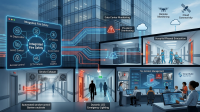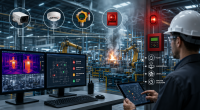
In an era where safety and efficiency are paramount, the integration of fire alarms with security systems has emerged as a powerful approach to safeguarding people, property, and assets. Traditionally, fire alarm systems and security systems—such as intrusion detection, CCTV, and access control—operated independently. While both served critical protective roles, the lack of communication between them sometimes resulted in slower response times and reduced overall effectiveness.
Today’s technological advancements make it possible to merge these systems into a single, intelligent platform. This integration not only enhances detection and response but also improves operational coordination, compliance, and cost efficiency.
Why Integration Matters
The goal of integrating fire alarms with security systems is straightforward: create a cohesive, automated safety network that responds faster and more effectively in emergencies.
- Faster Emergency Response
In a fire, every second counts. When fire alarms trigger, an integrated system can automatically initiate multiple safety actions simultaneously—unlocking exit doors, disabling access control barriers, alerting security staff, and sending live camera feeds to emergency responders. - Better Situational Awareness
By linking fire alarm signals with CCTV, operators can immediately view affected areas, verify threats, and direct evacuation efforts more effectively. - Reduced Human Error
Manual coordination between separate systems is prone to delays and mistakes. Automation ensures that emergency protocols are triggered instantly, without relying on a person to relay information between systems.
Key Components of Integration
A successful integration requires careful consideration of both hardware and software compatibility. Here are the main components:
- Fire Detection System
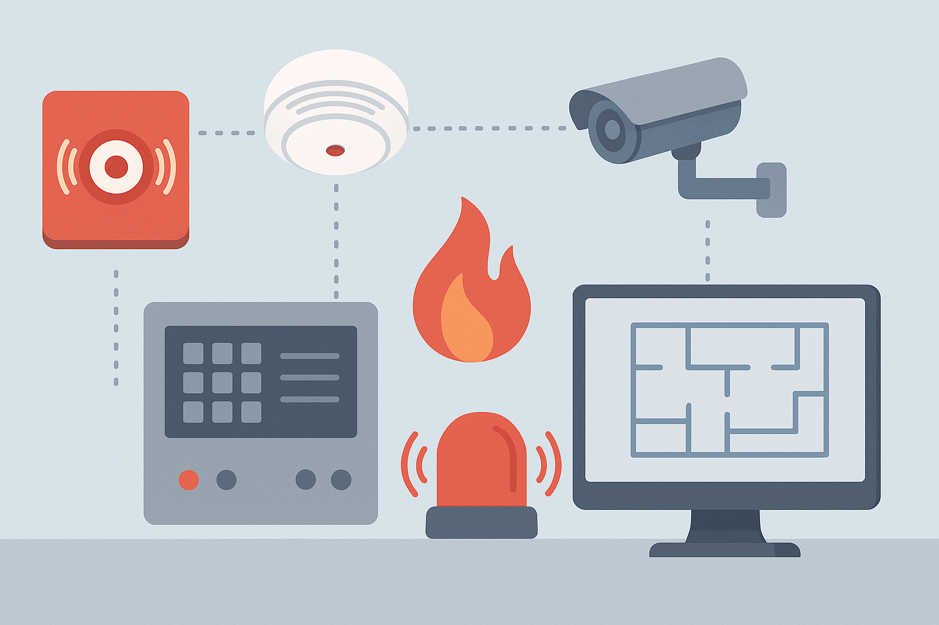
Includes smoke detectors, heat detectors, flame detectors, and manual call points. The system’s primary role is to detect fire or smoke and send alerts. - Intrusion Detection & Alarm System
Covers motion detectors, door/window sensors, and sirens. While focused on security breaches, this system becomes a valuable tool when used alongside fire alerts—helping to guide and control building occupants. - Access Control System
Manages electronic locks, card readers, and biometric scanners. In a fire, the integration allows for automatic door unlocking to ensure quick evacuation while preventing entry to hazardous areas. - CCTV Surveillance
Provides visual confirmation during a fire alarm, helping security personnel and emergency responders assess the scale of the incident. - Central Monitoring Platform
A unified dashboard where fire and security alerts converge. Operators can manage events in real-time, track evacuation progress, and maintain communication with emergency services.
How Integrated Systems Work in an Emergency
Let’s imagine a fire breaks out in a multi-floor office building:
- Detection – A smoke detector triggers a fire alarm signal.
- Automation – The system simultaneously:
- Sends an evacuation announcement over the public address system.
- Unlocks emergency exit doors and lifts access restrictions.
- Sends an alert to the building’s security control room and remote monitoring center.
- Activates CCTV feeds for the affected area.
- Security Coordination – Security guards guide people towards safe exits, monitor crowd movement via cameras, and lock down unaffected zones to prevent theft or unauthorized access during evacuation.
- Emergency Response – Integrated alerts are automatically transmitted to the local fire department, along with live video and floor plans.
This seamless chain of events shortens response times, improves safety, and minimizes damage.
Benefits Beyond Safety
While the primary purpose is life safety, integrating fire alarms with security systems offers additional advantages:
- Regulatory Compliance – Many industries, such as healthcare and manufacturing, have strict safety requirements. Integration helps meet fire and building codes more easily.
- Cost Efficiency – A single control platform reduces the need for separate monitoring contracts, redundant wiring, and multiple maintenance schedules.
- Data Insights – Unified systems can track patterns—such as repeated false alarms in specific zones—helping to identify and resolve underlying issues.
- Future Scalability – Modern integration platforms are flexible, allowing you to add smart sensors, IoT devices, and advanced analytics as needs evolve.
Challenges and Considerations
While integration brings many benefits, it’s not without challenges:
- Compatibility Issues – Older fire alarm panels and security systems may not support modern integration protocols.
- Cybersecurity Risks – Network-connected systems require robust security measures to prevent hacking or unauthorized access.
- Maintenance Complexity – Technicians must be trained to handle both fire and security systems to ensure proper operation.
- Regulatory Approval – In some regions, integrated systems must be approved by local fire authorities to ensure compliance with life-safety standards.
Best Practices for Implementation
- Work with Certified Professionals – Choose vendors experienced in both fire safety and security integration.
- Conduct a Risk Assessment – Identify critical areas, potential hazards, and existing system gaps before integration.
- Ensure Redundancy – Integrated systems should have backup power, fail-safe protocols, and independent alert paths to maintain functionality during power outages or system failures.
- Train Staff Thoroughly – Everyone—from security officers to receptionists—should know how to respond when the integrated system is activated.
- Regular Testing & Maintenance – Conduct monthly and annual system tests, ensuring compliance with fire codes and operational readiness.
Conclusion
Integrating fire alarms with security systems transforms a building’s safety strategy from reactive to proactive. By combining detection, communication, and control in a single platform, organizations can protect lives, minimize damage, and improve operational efficiency.
As technology continues to advance, integration will become the standard rather than the exception—providing smarter, faster, and more reliable protection for businesses, public spaces, and critical infrastructure.