In industrial plants, data centers, warehouses, chemical facilities, and other critical infrastructure, the threat of fire is not just a matter of property damage — it can mean catastrophic loss of assets, disruption of operations, and risk to human life. High-risk areas require more than standard smoke alarms; they demand advanced, reliable, and often customized fire detection systems that respond quickly, accurately, and with minimal false alarms.
This article explores the unique challenges of fire detection in high-risk environments, the types of systems best suited for these areas, and key considerations for designing and maintaining them.
Understanding High-Risk Areas
High-risk areas are locations where the likelihood of fire is higher, or the consequences of a fire are more severe than in typical environments. These include:
- Industrial facilities handling flammable materials
- Power plants and energy generation sites
- Oil and gas facilities including refineries and offshore platforms
- Chemical manufacturing plants
- Warehouses storing combustible goods
- Data centers with sensitive electronic equipment
- Aircraft hangars and transportation hubs
- Tunnels and enclosed transport systems
In such locations, early detection is critical because fires can spread rapidly and traditional detection methods may not respond in time.
Key Challenges in Fire Detection for High-Risk Areas
Designing a fire detection system for a high-risk environment is not as simple as installing smoke detectors. Challenges include:
- Harsh environmental conditions – High humidity, dust, vibration, or extreme temperatures can affect sensor accuracy.
- False alarms – Steam, dust, or exhaust fumes may trigger standard detectors unnecessarily, causing costly downtime.
- Rapid fire spread – In facilities with volatile materials, fire can escalate within seconds, leaving minimal response time.
- Accessibility issues – Large or confined spaces can make maintenance and testing difficult.
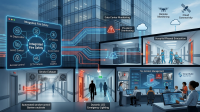
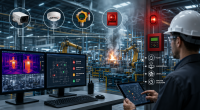
- Integration needs – Systems often must link with suppression systems, building management systems (BMS), or industrial control networks.
Types of Fire Detection Systems for High-Risk Areas
Different environments require different detection technologies. In high-risk areas, systems are often combined to ensure comprehensive coverage.
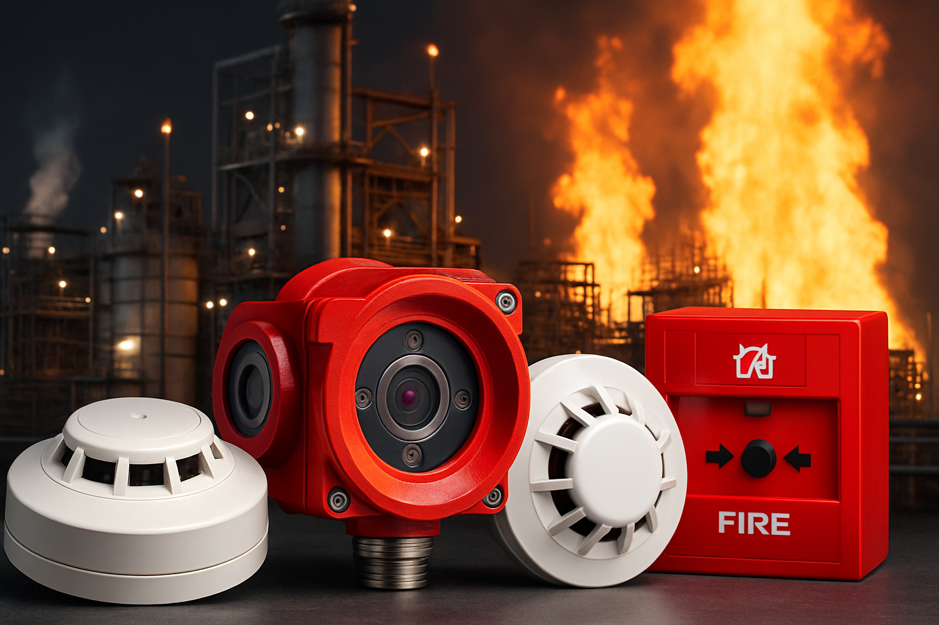
- Heat Detection Systems
- Fixed temperature detectors trigger when a preset temperature is reached.
- Rate-of-rise detectors activate when temperature increases rapidly, indicating a possible fire.
- Ideal for dusty or smoky environments where optical detectors may produce false alarms.
- Smoke Detection Systems
- Aspirating Smoke Detection (ASD): Uses a network of pipes to continuously sample air, detecting smoke at very early stages. Common in data centers and cleanrooms.
- Beam smoke detectors: Cover large open spaces like warehouses by projecting an infrared beam across an area.
- Multi-sensor detectors: Combine smoke, heat, and sometimes CO sensors to increase accuracy and reduce false alarms.
- Flame Detection Systems
- Ultraviolet (UV) detectors: Detect UV radiation from flames, ideal for detecting fast-burning fires.
- Infrared (IR) detectors: Identify heat signatures from flames; often used in outdoor or high-temperature industrial environments.
- UV/IR combination detectors: Provide faster and more accurate detection while minimizing false alarms.
- Gas Detection Systems
In facilities where combustible gases may leak and ignite, gas detectors are critical. They identify hazardous concentrations before combustion occurs.
Integration with Fire Suppression Systems
For high-risk areas, detection alone is insufficient — it must be integrated with suppression systems for rapid response. Examples include:
- Water mist systems for cooling and fire control without damaging sensitive equipment.
- Gaseous suppression systems (e.g., FM-200, Novec 1230, CO₂) for data centers or chemical storage where water would cause damage.
- Foam suppression for fuel storage areas or aircraft hangars.
A well-integrated system ensures that once a threat is detected, suppression is activated immediately, minimizing fire growth.
Design Considerations for High-Risk Fire Detection Systems
When planning a fire detection system for a high-risk environment, several factors must be addressed:
- Hazard analysis – Identify potential ignition sources, fuel types, and spread patterns.
- Detection speed – Select systems that detect fires at their earliest stage.
- Environmental suitability – Choose detectors resistant to dust, humidity, or extreme temperatures.
- System redundancy – Use multiple detection methods to ensure reliability.
- Maintenance access – Plan for regular testing without disrupting operations.
- Compliance – Adhere to local and international fire safety standards (e.g., NFPA, EN 54, FM Global).
Maintenance and Testing
High-risk fire detection systems must undergo routine inspection and functional testing. This ensures sensors remain sensitive, communication links are intact, and backup power is operational. Failure to maintain systems can render even the most advanced technology ineffective in an emergency.
Conclusion
High-risk areas demand advanced fire detection systems that combine speed, accuracy, and resilience. A well-designed solution not only prevents catastrophic losses but also provides peace of mind to operators and stakeholders.
By carefully selecting the right detection technologies, integrating them with suppression systems, and maintaining them regularly, organizations can significantly reduce the threat of fire and ensure the safety of people, assets, and operations.