For decades, fire safety inspections followed a predictable, paper-heavy rhythm. An inspector would walk through a facility with a clipboard, check off physical lists, manually log the expiration dates of fire extinguishers, and note blocked exit doors with a pen. Back at the office, these notes were typed into spreadsheets, filed away in cabinets, and often forgotten until the next annual review.
This traditional method, while well-intentioned, is inherently flawed. It is prone to human error, suffers from fragmented data siloed across different departments, and creates a dangerous time lag between identifying a life-threatening hazard and actually fixing it. In an era where buildings are taller, smarter, and more complex than ever before, relying on a paper checklist is no longer just inefficient—it is a distinct liability.
Today, a profound digital transformation is sweeping through the fire protection and life safety industries. Driven by mobile cloud platforms, the Internet of Things (IoT), big data analytics, and smart compliance frameworks, digital audits are fundamentally reshaping how we detect risks, maintain strict regulatory compliance, and ultimately protect human lives.
The Death of the Clipboard: Driving Efficiency on the Ground
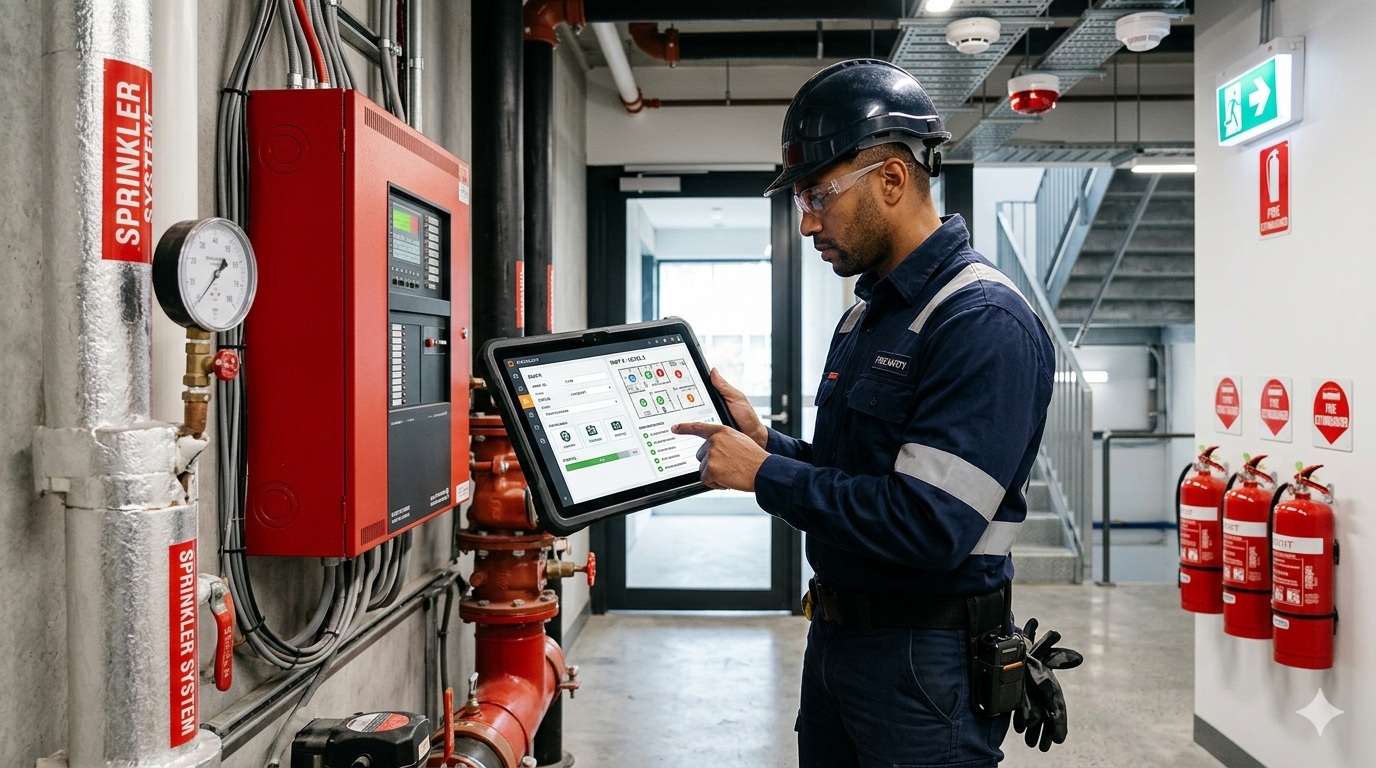
The most immediate and visible impact of digital audits is the elimination of administrative overhead. Armed with smartphones or tablets running specialized fire safety inspection software, inspectors can now conduct thorough walkthroughs with drastically reduced friction and far greater accuracy.
In the past, an inspector might spend hours transcribing handwritten notes, matching printed digital photos to specific code violations, and manually look up local National Fire Protection Association (NFPA) standards. Digital auditing platforms erase this backend workload entirely through several key mechanisms.
- Real-Time Data Entry and Media Attachment
Instead of transcribing notes after the fact, inspectors log data directly into cloud databases while standing right in front of the asset. If a sprinkler head is obstructed or an exit sign is unlit, the inspector can take a high-resolution photograph within the app. The software automatically attaches the image, applies a precise timestamp, and uses GPS to log the exact location within the facility. This creates an indisputable, tamper-proof record of the violation. - Automated Form Logic and Dynamic Workflows
Digital forms ensure a level of thoroughness that paper simply cannot enforce. Dynamic form logic adapts to the specific environment in real time. For example, if an inspector selects “Commercial Kitchen” on their tablet, the software automatically populates the exact regulatory questions required for that specific type of chemical suppression system and ventilation hood. If a critical safety question is skipped, the system prevents the inspector from submitting the report, virtually eliminating human oversight and missed steps. - Instantaneous Reporting and Collaborative Action
Once an inspection is finalized on-site, the software compiles the data into a polished, code-compliant report in seconds. Rather than waiting days or weeks for a typed document to arrive in the mail, building managers, facilities engineers, and local fire authorities receive the report instantly via email or a secure client portal. This acceleration means that critical repairs can be greenlit and scheduled before the inspector even leaves the parking lot.
Transitioning from Reactive Maintenance to Proactive Monitoring
Historically, fire inspections have been a snapshot in time. A fire alarm system, smoke damper, or backflow preventer is verified as functional on the day of the annual test, but there is no guarantee it won’t fail twenty-four hours later. This reactive model relies heavily on luck, assuming that equipment will remain flawless between scheduled visits.
Digital auditing ecosystems solve this fundamental vulnerability by integrating seamlessly with the Internet of Things (IoT) and smart building infrastructure.
- Continuous Remote Telemetry
Modern fire protection assets are increasingly outfitted with smart sensors, wireless pressure gauges, and network-connected fire panels. These devices constantly transmit health and status data to the cloud. Instead of waiting for a manual checkup to discover that a critical valve has been closed or that a backup battery is degrading, the digital system logs anomalies the moment they occur. - Triggered Mid-Cycle Audits
When an IoT sensor detects a drop in water pressure or an isolated system fault, it does not just trigger a passive warning light in a basement. The cloud platform automatically generates a targeted, digital work order and dispatches an inspector or technician to the site. This shifts the entire paradigm of fire safety from a rigid calendar schedule to a dynamic, condition-based model, catching hidden vulnerabilities before they can escalate into catastrophic failures during a real emergency.
Establishing the “Golden Thread” of Building Information
In the wake of major global structural disasters, there is a massive push among international regulators to enforce what is known as the “Golden Thread” of building safety information. This concept dictates that there must be a digital, unbroken, and easily accessible record of a building’s design, construction, maintenance, and safety profile throughout its entire lifecycle.
Digital audits serve as the primary ledger for maintaining this thread. Because every inspection, deficiency report, permit, and repair invoice is securely stored in a centralized cloud environment, building owners unlock unprecedented data transparency.
- Lifecycle Traceability
If a commercial building changes ownership, undergoes structural renovations, or switches facility management companies, the entire fire safety history remains intact and accessible. New stakeholders do not have to hunt down dusty binders or guess when the fire pumps were last serviced. The complete digital pedigree of every asset is available at the click of a button. - Liability Reduction and Audit Readiness
For property owners, having a continuous, timestamped digital history is the ultimate shield against liability. In the event of an incident or a surprise regulatory audit by local authorities, the organization can instantly prove its historical compliance. They can demonstrate a clear timeline of discovering an issue and promptly resolving it, showcasing a culture of proactive safety that satisfies both insurance underwriters and legal scrutiny.
Next-Generation Frontiers: AR, Drones, and Digital Twins
The evolution of digital audits is moving far beyond mobile applications and digital forms. The integration of frontier technologies is pushing the boundaries of what safety inspections can achieve, making the invisible visible.
- Augmented Reality (AR) Overlays
Using AR headsets or mobile screen overlays, inspectors can superimpose Building Information Modeling (BIM) data directly onto the physical spaces they are walking through. An inspector can look at a solid concrete wall or ceiling grid and visualize the exact path of the fire suppression piping, electrical conduits, and smoke barriers hidden behind the drywall. This allows them to verify installation accuracy and identify hidden code violations without causing destructive damage to the property. - Aerial Drone Inspections and Thermal Imaging
For sprawling industrial complexes, massive logistical warehouses, or high-rise building facades, manual inspection can be incredibly dangerous and time-consuming. Drones equipped with high-definition and thermal imaging cameras are taking over these high-risk tasks. They can rapidly scan rooftops, external fire escapes, and complex outdoor piping networks, mapping thermal anomalies that suggest electrical overloads, overheating machinery, or insulation failures that pose an immediate fire risk. - Living Digital Twins
A digital twin is a dynamic, virtual replica of a physical building that updates in real time based on IoT data and audit inputs. By feeding digital audit histories into a digital twin, facility managers can run advanced predictive simulations. They can virtually simulate how a fire would spread through specific corridors, analyze how smoke management systems will perform under stress, and test the efficiency of evacuation routes based on current occupancy data.
Cultivating a Global Culture of Prevention
The ultimate value of digitizing fire safety audits is not found in the sophisticated software or the gadgets used on-site; it is found in the data itself. When hundreds of buildings across a university campus, a corporate portfolio, or an entire municipality utilize digital auditing, they generate an incredibly rich dataset.
Using artificial intelligence and big data analytics, safety directors can look across thousands of inspection reports to spot macro-trends. They can identify that a specific model of fire pump routinely fails after four years, or that a particular facility design consistently suffers from blocked exit corridors. Armed with this intelligence, leadership can make data-driven capital deployment decisions, fixing systemic issues before they result in a tragedy.
Ultimately, the transformation of fire safety inspections from a paper-based chore into a digital, proactive ecosystem saves the most valuable asset of all: time. By stripping away administrative delays and providing total clarity on building vulnerabilities, digital audits ensure that fire prevention keeps pace with modern innovation—acting as a proactive shield that preserves property, protects first responders, and saves lives.




Leave A Comment