Fire protection technology is evolving at a pace never seen before. Driven by rapid urbanization, climate-related risks, increasing building complexity, and stricter global regulations, the industry is gearing up for a wave of innovation that will redefine how we detect, prevent, and suppress fire. As we step into 2026 and look further ahead, several key trends are emerging—merging smart systems, sustainability, artificial intelligence, and predictive analytics into a new era of fire safety.
Below are the major predictions shaping the future of fire protection and how they will influence buildings, industries, and communities worldwide.
- AI-Driven Fire Detection Will Become the Global Standard
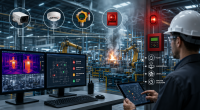
Traditional smoke detectors have limits—they rely on particles reaching the sensor, which delays response. By 2026, artificial intelligence will be deeply integrated into detection systems, enabling:- Visual fire detection using cameras
AI-enabled CCTV can identify flames, smoke movement, heat distortion, or early-stage anomalies in seconds—far faster than typical detectors. - Predictive fire risk scoring
Systems will use building history, occupancy patterns, weather data, and machinery performance to predict where a fire is likely to start before it happens. - Multi-sensor fusion
Smart detectors combining smoke, heat, CO, flame, and humidity readings will cross-validate data, reducing false alarms by up to 90%.
AI-driven fire detection will become essential for high-rise buildings, data centers, industrial plants, and smart homes.
- Visual fire detection using cameras
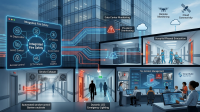
- Smart Buildings Will Use Digital Twins for Real-Time Fire Response
A digital twin is a live, virtual replica of a building that updates constantly using IoT sensors. By 2026–2030, digital twins will become a core component of fire protection strategies.
Key Advantages:- Instant fire path prediction, showing where flames or smoke will spread within seconds
- Automated evacuation planning, adjusting routes based on blocked exits, crowd movement, and fire location
- Virtual testing of fire scenarios before construction even begins
- Integration with firefighting teams, giving responders live building data
Facilities like hospitals, airports, shopping malls, and mega-complexes will rely heavily on digital twins for accurate fire modeling and emergency response.
- Ultra-Early Detection Through Air Sampling and Laser Sensors
Aspirating smoke detection (ASD) systems are already used in high-risk facilities—but the next generation will be even more sensitive and widespread.
By 2026, expect:- Laser-based smoke analysis capable of detecting microscopic particles from overheating wires
- ASD mini systems designed for homes and small businesses
- Cloud-based ASD monitoring, alerting building owners instantly via mobile apps
This advancement will be crucial for environments where early detection is everything: laboratories, telecommunications centers, power plants, and archives.
- Environment-Friendly Suppression Systems Will Replace PFAS-Based Agents
Global regulations are phasing out PFAS-containing foams due to environmental and health concerns. As a result, the next era of suppression technology will emphasize sustainability.
Expected trends:- PFAS-free firefighting foams becoming the international norm
- Water-mist systems replacing sprinklers for data centers and hotels
- Inert gas suppression gaining popularity for sensitive electronics
- Smart water usage, reducing water damage and waste
Fire protection companies are already investing heavily in greener chemical formulations, and full industry transition is likely by 2027–2030.
- Robotics and Drones Will Transform Firefighting Operations
Robotic firefighting is no longer futuristic—it’s rapidly becoming a necessity.
Emerging capabilities:- Firefighting drones for high-rise exterior fires
- Robotic hose carriers maneuvering through hazardous or collapsing structures
- Thermal imaging drones mapping hotspots for firefighters
- Autonomous inspection robots patrolling industrial facilities
These technologies will reduce risk for frontline responders while improving speed and accuracy.
- Wildfire Protection Will Shift to Predictive and Preventive Models
Climate change is intensifying wildfire seasons globally, demanding new strategies.
Future wildfire innovations:- Satellite-based fire detection with sub-minute alerts
- AI prediction models that analyze wind, dryness, and vegetation patterns
- Autonomous firebreak robots that clear vegetation ahead of fires
- Smart sprinkler perimeters for wildfire-prone communities
By 2030, regions like California, Australia, Canada, and Mediterranean countries will adopt predictive wildfire control as a national requirement.
- Smart Homes Will Adopt Integrated Fire Ecosystems
Residential fire safety will undergo a major transformation.
Expect homes to include:- Smart detectors connected directly to fire departments
- Appliances with built-in fire sensors (stoves, air conditioners, batteries)
- Battery monitoring systems to detect thermal runaway early
- Voice alerts integrated with home assistants
With more devices using lithium-ion batteries, smart homes will prioritize early overheating detection.
- Stricter Compliance and Digital Reporting Will Become Mandatory
Governments worldwide will shift to more rigorous fire safety standards, and enforcement will increasingly be digital.
Potential changes:- IoT-based inspection logs replacing manual checklists
- Mandatory fire system connectivity for large buildings
- Centralized national fire safety databases
- AI-driven compliance auditing
This will enhance accountability and reduce overlooked maintenance issues.
- Fire Protection Will Integrate With Cybersecurity
As fire systems become smarter, they also become potential cyber targets. By 2026 and beyond:
Expect:- Encrypted communication protocols for detectors and panels
- Cyber-secure fire alarm control units
- Regular penetration testing becoming mandatory
Cyber-physical safety will be a new priority in fire protection.
- Fire Protection Will Move Toward Full Automation
The long-term future points to fully automated systems that detect, communicate, and suppress fire with little to no human intervention.
This will include:- Automated detection → suppression → ventilation → evacuation
- Real-time communication with city fire departments
- Self-testing detectors with predictive maintenance alerts
- Buildings that “respond” instantly using AI logic
This evolution will save countless lives, reduce property damage, and modernize how societies manage fire risks.
Conclusion
The fire protection landscape of 2026 and beyond will be defined by intelligence, sustainability, automation, and integration. AI-driven detection, digital twins, eco-friendly suppression, advanced robotics, and predictive wildfire models will reshape the entire industry.
In the coming decade, fire protection will shift from a reactive system to a fully predictive and proactive one—reinventing how we think about safety in homes, cities, and critical infrastructure.