Fire safety has traditionally been reactive—alarms trigger, responders rush in, and damage control begins. While this approach has saved countless lives, it still relies on a fire already happening. In an era defined by data, connectivity, and artificial intelligence, fire prevention is shifting toward something far more powerful: prediction.
Smart analytics enables organizations, cities, and industries to anticipate fire risks before ignition occurs. By analyzing patterns across environmental, behavioral, and infrastructural data, predictive systems can identify vulnerabilities, issue early warnings, and guide preventive action. This transformation marks a critical evolution in how we think about fire safety—from emergency response to proactive risk management.
What Are Smart Analytics in Fire Risk Management?
Smart analytics refers to the use of advanced data processing techniques—including machine learning, statistical modeling, and real-time sensor analysis—to extract meaningful insights from complex datasets. In fire risk prediction, smart analytics brings together multiple data streams such as:
- Temperature, humidity, and weather trends
- Electrical load and equipment performance
- Building occupancy and human behavior patterns
- Historical fire incident records
- Real-time sensor and IoT data
Instead of evaluating each factor in isolation, smart analytics looks at relationships, trends, and anomalies that signal elevated fire risk.
Why Traditional Fire Risk Assessment Falls Short
Conventional fire risk assessments are usually:
- Periodic rather than continuous
- Based on static checklists
- Heavily dependent on human inspection
- Slow to adapt to changing conditions
While these methods remain important for compliance, they struggle to keep up with modern environments such as smart buildings, dense urban areas, and industrial facilities operating 24/7. Fires, however, often result from dynamic conditions—overloaded circuits, unusual heat patterns, or human behavior changes that static assessments may miss.
Smart analytics fills this gap by monitoring conditions continuously and adapting risk models in real time.
Key Data Sources Powering Fire Risk Prediction
- Environmental Data
Weather conditions such as heatwaves, low humidity, and strong winds dramatically increase fire probability. Smart systems analyze both real-time and forecasted data to anticipate high-risk periods, particularly in wildfire-prone regions. - Infrastructure and Equipment Data
Electrical faults are a leading cause of fires. Smart analytics monitors:- Power consumption spikes
- Abnormal heat in wiring or panels
- Equipment aging and failure patterns
Predictive models can flag components likely to fail before sparks or overheating occur.
- Occupancy and Behavioral Data
Human behavior plays a major role in fire incidents. Analytics can detect:- Overcrowding
- Unusual movement patterns
- After-hours activity
- Repeated unsafe behaviors
This insight is especially valuable in commercial buildings, factories, and public venues.
- Historical Incident Data
Past fires provide critical learning signals. By analyzing when, where, and how fires occurred, predictive systems identify recurring risk factors and apply them to current conditions.
How Predictive Models Identify Fire Risks
Smart analytics systems use a combination of techniques:
- Pattern recognition to spot trends that historically led to fires
- Anomaly detection to identify unusual conditions (e.g., sudden heat spikes)
- Risk scoring models that assign probability levels to assets, zones, or time periods
- Machine learning algorithms that improve accuracy as more data is collected
Instead of issuing a generic alert, these systems can say why a risk is rising, where it is most likely to occur, and when intervention is needed.
Real-World Applications of Predictive Fire Analytics
Smart Buildings
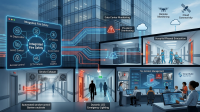
In intelligent buildings, analytics platforms integrate with fire sensors, HVAC systems, and electrical infrastructure. They can:
- Detect overheating before smoke appears
- Adjust ventilation to reduce ignition risk
- Alert facility managers with actionable insights
Industrial and Manufacturing Facilities
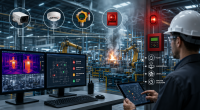
Factories often involve flammable materials and heavy machinery. Predictive analytics helps:
- Identify equipment likely to overheat
- Reduce downtime through preventive maintenance
- Prevent costly fires that disrupt supply chains
Smart Cities and Urban Areas
Cities use predictive fire analytics to:
- Allocate firefighting resources strategically
- Identify high-risk neighborhoods
- Combine traffic, weather, and infrastructure data for faster response
Wildfire Risk Management
By combining satellite imagery, weather data, and vegetation analysis, predictive systems estimate wildfire likelihood days or even weeks in advance—enabling early evacuation planning and targeted prevention efforts.
Benefits of Leveraging Smart Analytics for Fire Prediction
- Early intervention before ignition occurs
- Reduced false alarms through contextual analysis
- Lower property damage and business interruption
- Improved safety for occupants and responders
- Data-driven decision-making for investments and maintenance
Most importantly, predictive analytics shifts fire safety from a cost center to a value-driven risk prevention strategy.
Challenges and Considerations
Despite its promise, smart analytics adoption comes with challenges:
- Data quality and integration across legacy systems
- Cybersecurity risks associated with connected sensors
- Model transparency, ensuring users understand why alerts occur
- Change management, as teams adapt to data-driven workflows
Successful implementation requires not just technology, but also training, governance, and cross-functional collaboration.
The Future of Fire Risk Prediction
As AI models become more sophisticated and sensor networks more widespread, predictive fire analytics will evolve toward:
- Fully autonomous risk mitigation
- Real-time simulation of fire scenarios
- Integration with emergency response automation
- Personalized risk models for individual buildings and assets
Fire safety will no longer be about responding to alarms—it will be about preventing alarms from ever sounding.
Conclusion
Leveraging smart analytics to predict fire risks represents a fundamental shift in fire safety philosophy. By harnessing data, intelligence, and continuous monitoring, organizations can move from reactive protection to proactive prevention. The result is safer environments, smarter decisions, and a future where fires are anticipated—not just extinguished.
In a world increasingly shaped by data, the smartest fire is the one that never starts.