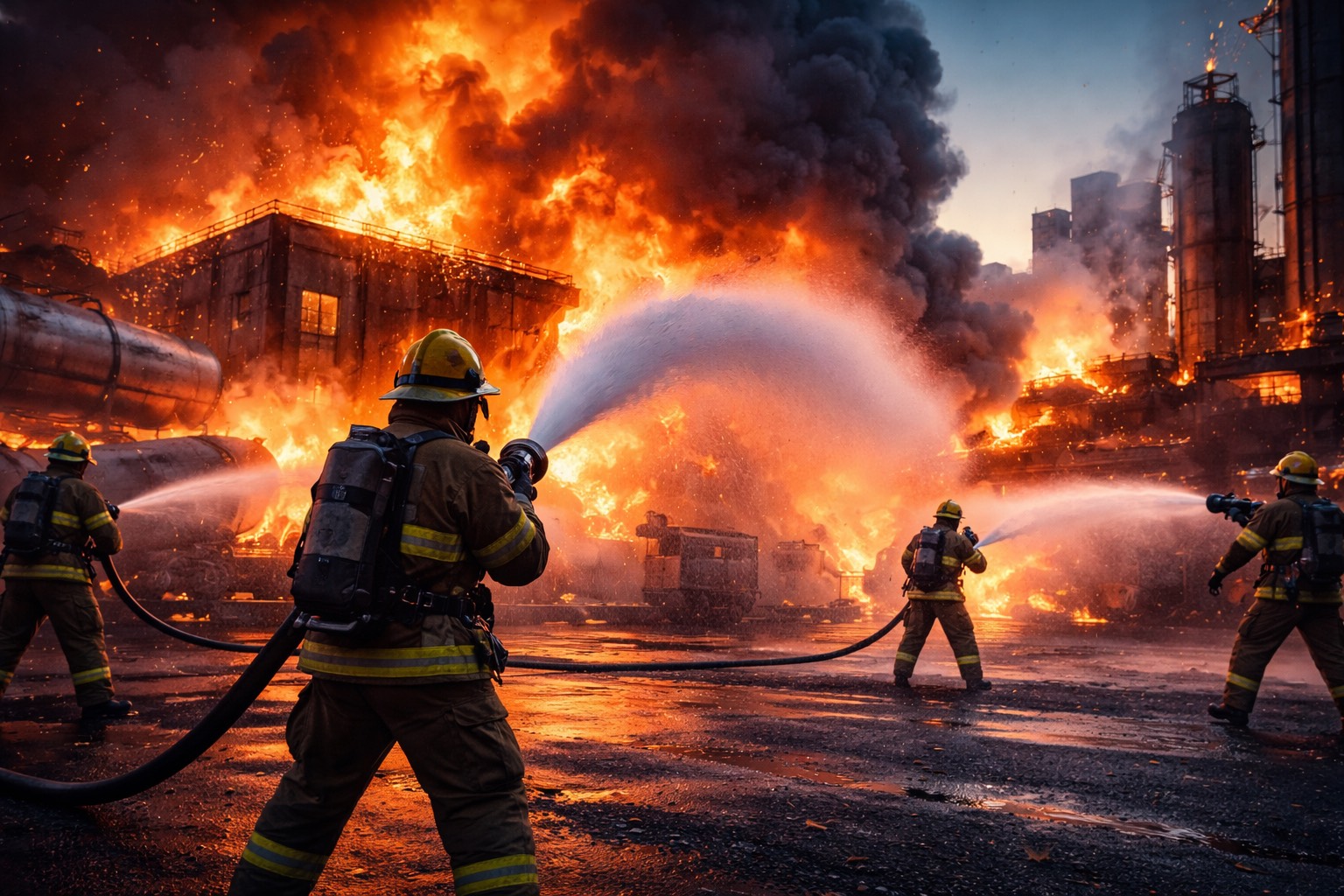
The year 2025 served as a stark reminder that fire remains one of the most destructive and unpredictable hazards facing modern societies. Despite advancements in building technology, fire protection systems, and emergency response strategies, several major fires across industrial, commercial, residential, and wildland settings resulted in significant loss of life, property damage, and environmental harm. These incidents exposed not only technical failures but also gaps in planning, maintenance, human behavior, and regulatory enforcement.
By examining the key fire events of 2025, fire safety professionals, building owners, regulators, and communities can extract critical lessons to reduce future risk and improve resilience.
- Fire Risk Is Evolving Faster Than Regulations
One of the clearest lessons from major fires in 2025 is that fire risk is changing faster than many codes and regulations can keep up with. Increased urban density, mixed-use developments, lithium-ion battery storage, data centers, and renewable energy infrastructure have introduced new ignition sources and fire dynamics.
In several industrial and commercial fires, existing fire codes were technically met, yet the protection measures proved inadequate for the actual fuel load and operational conditions. This highlights the limitation of a purely compliance-based approach to fire safety. Performance-based design, fire risk assessments, and scenario-based modeling are increasingly necessary to address modern hazards that fall outside traditional prescriptive requirements.
Key takeaway: Fire safety strategies must be proactive and risk-based, not merely code-compliant. - Poor Maintenance Remains a Leading Contributor to Fire Losses
Repeated investigations in 2025 revealed that many fire protection systems failed not because they were poorly designed, but because they were poorly maintained. Non-functional fire alarms, closed sprinkler control valves, degraded fire pumps, and expired fire extinguishers were common findings.
In some cases, maintenance records existed but did not reflect actual system conditions, indicating superficial inspections or lack of qualified personnel. In others, systems had been altered during renovations without proper re-commissioning.
Key takeaway: Fire protection systems are only as effective as their maintenance. Regular inspection, testing, and maintenance (ITM) by competent professionals is non-negotiable. - Human Factors Continue to Play a Critical Role
Human behavior was a significant factor in many major fires of 2025. This included unsafe hot work practices, improper storage of combustible materials, overloading of electrical systems, and disabled safety features intended to prevent nuisance alarms.
Additionally, delayed evacuation, lack of fire drills, and confusion during emergencies contributed to higher casualty rates in some incidents. In residential and workplace fires alike, occupants often underestimated the speed of fire and smoke spread, attempting to fight the fire themselves or retrieve belongings instead of evacuating immediately.
Key takeaway: Technology alone cannot prevent fire disasters. Continuous training, awareness, and a strong safety culture are essential. - Early Detection and Rapid Response Save Lives
Where fires in 2025 were detected early and emergency response was swift, outcomes were dramatically better. Facilities equipped with properly functioning smoke detection, automatic suppression systems, and clear emergency communication protocols experienced significantly reduced damage and faster recovery.
Conversely, fires that began in unmonitored spaces—such as electrical rooms, ceiling voids, storage areas, or remote industrial zones—often grew unchecked before discovery, overwhelming suppression systems and responders.
Key takeaway: Early detection, system redundancy, and reliable monitoring are among the most effective life- and property-saving measures. - Electrical and Energy-Related Fires Are Increasing
A notable trend in 2025 was the rise in fires linked to electrical systems and energy storage technologies. Lithium-ion batteries used in energy storage systems, electric vehicles, and backup power supplies were involved in several high-profile incidents. These fires presented unique challenges due to rapid heat release, toxic smoke, and re-ignition risks.
Traditional suppression methods were sometimes ineffective, emphasizing the need for specialized detection, ventilation, separation distances, and firefighting strategies tailored to energy-related hazards.
Key takeaway: Emerging energy technologies require updated fire protection designs, specialized training, and revised emergency response procedures. - Compartmentation and Passive Fire Protection Matter
Many fires in 2025 spread far beyond their point of origin due to failures in passive fire protection. Missing or damaged fire doors, unsealed service penetrations, and compromised fire-rated walls allowed fire and smoke to spread rapidly between compartments.
In contrast, buildings with intact compartmentation demonstrated far better fire containment, giving occupants more time to escape and firefighters a safer environment to operate.
Key takeaway: Passive fire protection is just as critical as active systems and must be protected from neglect and unauthorized modifications. - Emergency Planning and Coordination Must Improve
Several large-scale fires exposed weaknesses in emergency planning and coordination between facility management, fire brigades, and local authorities. Issues included outdated emergency response plans, lack of site familiarity for responders, poor access to fire protection infrastructure, and communication breakdowns during incidents.
Facilities that had conducted joint drills with local fire services and maintained up-to-date emergency documentation generally experienced more efficient firefighting operations and reduced losses.
Key takeaway: Emergency preparedness is an ongoing process that requires coordination, rehearsal, and continuous improvement. - Climate Conditions Are Amplifying Fire Severity
Extreme weather conditions in 2025—such as prolonged heatwaves, droughts, and strong winds—contributed to the severity of both urban and wildland fires. High ambient temperatures increased ignition likelihood and accelerated fire growth, while water supply limitations complicated suppression efforts in some regions.
This reinforces the need to integrate climate risk into fire safety planning, especially for facilities located in high-risk environments.
Key takeaway: Fire safety planning must account for changing climate conditions and their impact on fire behavior. - Post-Fire Recovery and Business Continuity Are Often Overlooked
Beyond immediate fire losses, many organizations in 2025 struggled with long-term recovery. Lack of business continuity planning, inadequate insurance coverage, and extended downtime led to permanent closures in some cases.
Facilities that had robust recovery plans, data backups, and clear restoration strategies were able to resume operations far more quickly.
Key takeaway: Fire safety extends beyond prevention and suppression—it also includes resilience and recovery planning.
Conclusion
The major fires of 2025 reinforced a fundamental truth: fire safety is a dynamic, multi-layered challenge that requires constant vigilance, adaptation, and commitment. While technology continues to advance, the effectiveness of fire protection ultimately depends on human responsibility, system reliability, and forward-thinking risk management.
By learning from the failures and successes of 2025, stakeholders can strengthen fire prevention strategies, improve emergency response, and build safer, more resilient environments for the future. Fire does not forgive complacency—but it does reward preparedness.