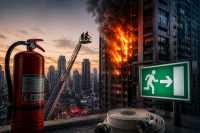
Fire safety has always been a critical concern for homes, businesses, and public spaces. For decades, traditional measures such as smoke detectors, fire extinguishers, and sprinkler systems have been the first line of defense against devastating fires. While these tools have saved countless lives, they often operate reactively—alerting occupants only after a fire has started.
With the rapid advancement of technology, fire safety is entering a new era. From artificial intelligence and IoT-enabled devices to robotics and smart materials, the landscape of fire prevention, detection, and response is transforming into a proactive and highly intelligent system. The future of fire safety promises not only to respond faster to fires but to predict and prevent them before they become life-threatening.
Smart Detection Systems: Beyond Smoke Alarms
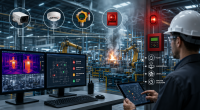
Traditional smoke detectors serve their purpose but have significant limitations, particularly when it comes to false alarms and delayed alerts. Modern fire safety technology integrates sensors with artificial intelligence to create smart detection systems. These devices can differentiate between harmless steam or cooking smoke and real fire hazards.
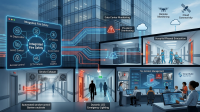
Connected to the Internet of Things (IoT), these detectors can communicate with other smart home or building systems. For example, a smart alarm can immediately alert occupants via smartphones, trigger automated fire suppression systems, and notify emergency services—all in real-time. Some advanced systems even track the movement and location of people inside a building, allowing first responders to plan safer evacuation routes and prioritize rescues.
Predictive Analytics: Preventing Fires Before They Start
One of the most exciting advancements in fire safety is predictive analytics. By analyzing large datasets from building sensors, historical fire incidents, weather patterns, and electrical usage, AI systems can identify potential fire risks long before they escalate.
In industrial environments, predictive fire safety can monitor machinery temperature, chemical storage conditions, and employee behaviors to flag potential hazards. Residential systems could analyze wiring conditions, detect flammable materials, and suggest preventive measures. By shifting fire safety from reactive to proactive, predictive analytics could significantly reduce the number of fires and associated damages.
Robotics and Autonomous Firefighting
Firefighting is one of the most dangerous professions in the world. Technology is now providing ways to reduce risk while improving efficiency. Robotics and drones are being developed to operate in environments too hazardous for humans.
Autonomous firefighting robots can enter smoke-filled buildings, spray water or fire-retardant foam, and provide real-time data to control centers. Drones equipped with thermal imaging can monitor large-scale fires, such as forest fires, identify hotspots, and assist in coordinating firefighting strategies. These technologies protect human firefighters and optimize the speed and precision of firefighting efforts.
Advanced Fire-Resistant Materials
Technology is also reshaping the materials used in construction. Fire-resistant and heat-dissipating materials are becoming more sophisticated, with innovations like self-extinguishing coatings, flame-retardant composites, and smart fabrics that respond to high heat.
Buildings made with these materials are not only safer but also buy critical time for occupants to evacuate. These materials, combined with smart detection systems, create an environment where fires are less likely to spread rapidly, ultimately reducing property damage and saving lives.
Integration with Smart Cities
Fire safety is no longer confined to individual buildings—it is becoming a fundamental part of smart city planning. IoT-enabled infrastructure, such as connected streetlights, public buildings, and water supply networks, can detect fire risks, alert nearby residents, and guide evacuation routes efficiently.
By integrating fire safety systems with city-wide networks, authorities can coordinate responses more effectively, dispatch emergency services faster, and manage resources in real-time. This integration is especially vital in high-density urban areas, where timely action can prevent small fires from turning into catastrophic disasters.
Education and Community Preparedness
Technology also plays a key role in educating communities about fire safety. Virtual reality (VR) and augmented reality (AR) platforms can simulate fire scenarios, teaching people how to respond effectively in emergencies. Smart apps can provide real-time safety tips, evacuation routes, and hazard alerts, ensuring that both individuals and organizations are prepared for potential incidents.
By combining predictive technologies with community education, we create a safety ecosystem that empowers people to act before, during, and after a fire.
Challenges and Considerations
Despite its potential, integrating technology into fire safety presents challenges. Cybersecurity is a major concern—hacked or malfunctioning systems could disrupt alerts or create false alarms. The cost of advanced technology may also limit access, particularly in developing regions. Furthermore, standardization is necessary to ensure different devices and systems can work seamlessly together.
Policymakers, manufacturers, and safety organizations must collaborate to address these challenges, ensuring that technological advancements are both reliable and widely accessible.
Conclusion
The future of fire safety is intelligent, interconnected, and proactive. Technology is moving beyond mere detection, allowing us to predict risks, prevent incidents, and respond with unprecedented speed and precision. From AI-powered detectors and predictive analytics to firefighting robots, advanced materials, and smart city integration, the landscape of fire safety is being completely redefined.
As these innovations continue to evolve, we can envision a world where fires are less frequent, emergency responses are faster, and human lives are better protected. Technology is not just shaping the future of fire safety—it is revolutionizing it.