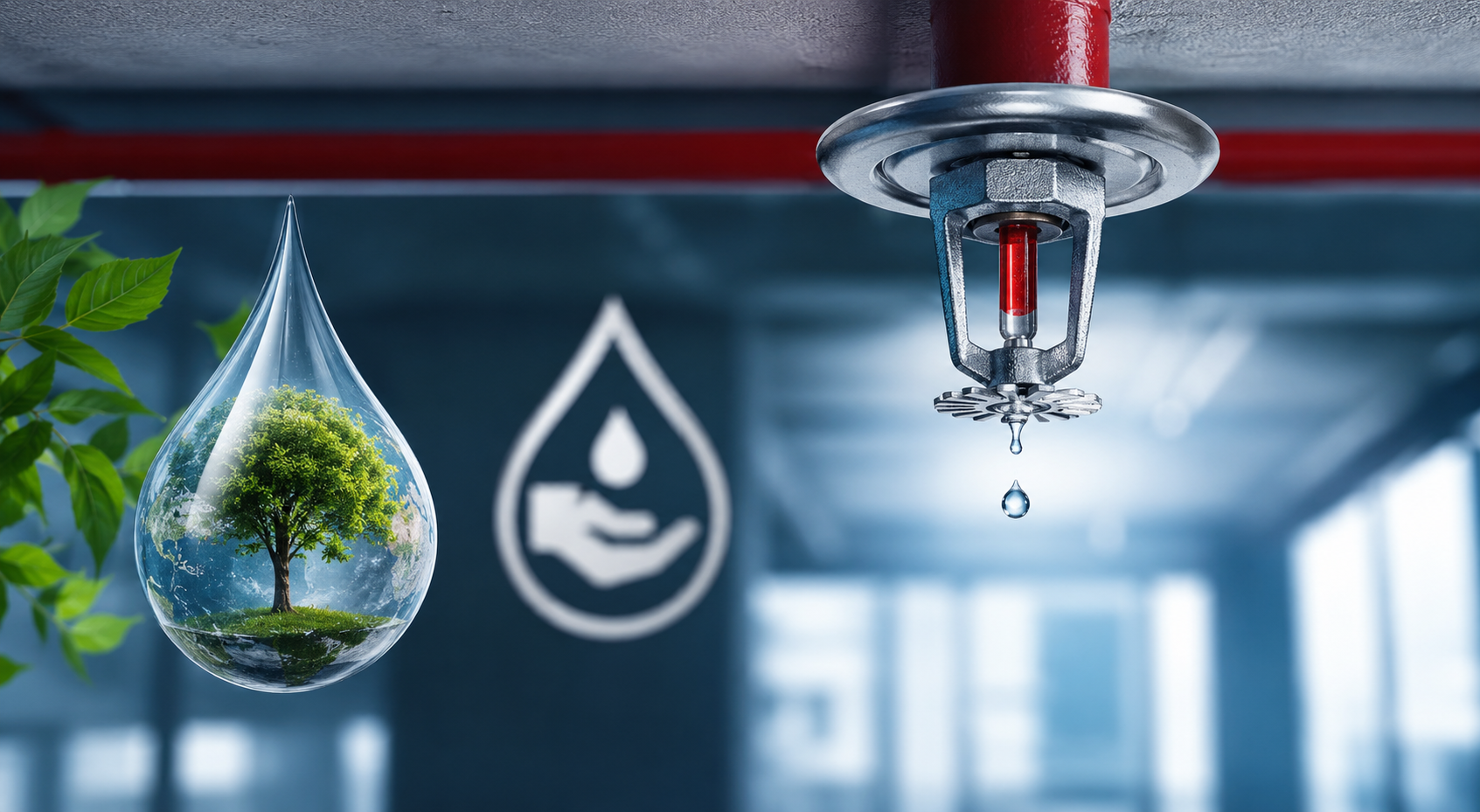
Fire sprinkler systems are among the most effective fire protection measures available today. They help control or extinguish fires during their early stages, protecting lives, property, and business continuity. However, as organizations place greater emphasis on sustainability and resource conservation, reducing water consumption has become an important consideration in fire protection design and operation.
The challenge lies in finding ways to minimize water usage without reducing the effectiveness of fire suppression. Fortunately, advances in technology, system design, and maintenance practices make it possible to improve water efficiency while maintaining the high safety standards required for fire protection.
Understanding the Role of Water in Fire Suppression
Water remains the most widely used fire suppression medium because of its ability to absorb heat, cool burning materials, and prevent fire spread. Traditional sprinkler systems are designed to deliver sufficient water to control a fire under worst-case conditions.
While fire protection must always remain the top priority, many systems may use more water than necessary due to outdated designs, inefficient equipment, or poor maintenance. Modern approaches focus on delivering water more effectively rather than simply increasing water volume.
The goal is not to reduce protection levels but to maximize the efficiency of every gallon or liter used during fire suppression operations.
The Importance of Water Conservation
Water scarcity is becoming a growing concern in many regions around the world. Commercial buildings, industrial facilities, and residential developments are increasingly seeking ways to reduce their environmental impact while meeting regulatory requirements.
Water-efficient fire protection systems offer several benefits:
- Reduced strain on municipal water supplies
- Lower operational and maintenance costs
- Improved sustainability performance
- Support for green building certifications
- Reduced water damage during fire incidents
- Enhanced resilience in areas facing water shortages
By integrating conservation strategies into fire protection planning, organizations can contribute to broader environmental goals without sacrificing safety.
Utilizing High-Efficiency Sprinkler Heads
One of the most effective ways to reduce water consumption is through the use of modern sprinkler heads designed for improved performance.
Advancements in sprinkler technology have led to the development of heads that produce optimized spray patterns, improved droplet sizes, and more precise water distribution. These features allow water to reach the fire more efficiently, increasing suppression effectiveness while potentially reducing the total volume of water required.
Specialized sprinkler heads can:
- Deliver water directly to critical fire zones
- Improve cooling efficiency
- Enhance fire control response
- Minimize unnecessary water discharge
Selecting the appropriate sprinkler type for a specific occupancy or hazard classification can significantly improve overall system efficiency.
Implementing Pre-Action and Deluge System Controls
Certain facilities may benefit from systems that prevent accidental water discharge.
Pre-action sprinkler systems require additional detection verification before water enters sprinkler piping. This approach reduces the risk of accidental activation caused by mechanical damage or system malfunction.
Similarly, advanced control systems can ensure that water is delivered only when fire conditions warrant activation. While these systems are primarily designed to protect sensitive environments, they also contribute to reducing unnecessary water use.
Examples include:
- Data centers
- Museums
- Archives
- Telecommunications facilities
- High-value manufacturing environments
By minimizing accidental releases, organizations can conserve substantial amounts of water over the life of a system.
Leveraging Advanced Fire Detection Technology
Early fire detection can significantly reduce the amount of water required for suppression.
Modern detection technologies can identify signs of fire before flames become fully developed. Smoke detectors, heat detectors, flame detectors, and intelligent monitoring systems provide earlier warnings, enabling faster response.
When a fire is detected in its incipient stage:
- Fire growth is limited
- Fewer sprinklers may activate
- Water demand decreases
- Property damage is reduced
- Emergency response becomes more effective
Integrating detection systems with sprinkler controls creates a coordinated fire protection strategy that enhances both safety and resource efficiency.
Optimizing Hydraulic Design
Hydraulic calculations play a critical role in determining how much water a sprinkler system delivers.
Modern engineering tools allow designers to create systems that provide precisely the required flow rates and pressures for specific hazards. Oversized systems may consume more water than necessary during operation, while properly optimized systems deliver efficient protection.
Hydraulic optimization can include:
- Accurate pipe sizing
- Strategic sprinkler placement
- Pressure management
- Flow balancing
- Updated hazard assessments
Careful design ensures that water reaches the fire effectively without excessive discharge.
Conducting Regular Inspection and Maintenance
Even the most advanced sprinkler system can become inefficient if it is not properly maintained.
Leaks, corrosion, damaged sprinkler heads, and pressure irregularities can reduce system performance and contribute to water waste. Routine inspections help identify issues before they become major problems.
A comprehensive maintenance program should include:
- Leak detection
- Pipe integrity checks
- Valve inspections
- Pressure testing
- Sprinkler head assessments
- Flow testing
Well-maintained systems operate more efficiently and remain ready to perform when needed.
Incorporating Water Mist Technology
Water mist systems represent one of the most innovative approaches to reducing water consumption in fire protection.
Unlike traditional sprinklers that discharge larger water droplets, water mist systems generate extremely fine droplets that absorb heat rapidly and create steam. This process helps cool the fire and displace oxygen around the combustion zone.
Benefits of water mist technology include:
- Significantly lower water usage
- Reduced water damage
- Faster cooling effects
- Effective protection for specific hazards
- Enhanced sustainability performance
While not suitable for every application, water mist systems can provide substantial water savings in appropriate environments.
Using Smart Monitoring and Analytics
Digital technology is transforming the management of fire protection systems.
Smart monitoring platforms can continuously track system performance, water pressure, flow rates, valve status, and maintenance requirements. Real-time analytics help facility managers identify inefficiencies and address issues promptly.
Advanced monitoring systems can:
- Detect leaks early
- Monitor abnormal water consumption
- Improve maintenance scheduling
- Support compliance efforts
- Enhance operational reliability
Data-driven decision-making allows organizations to balance safety requirements with sustainability goals more effectively.
Integrating Sustainable Building Design
Fire protection should be considered as part of a broader sustainability strategy.
Green building projects increasingly integrate water-efficient fire protection measures alongside other conservation initiatives. Coordinating sprinkler system design with building architecture, occupancy planning, and risk management can create opportunities for improved efficiency.
Examples include:
- Optimized compartmentalization
- Fire-resistant construction materials
- Enhanced detection systems
- Strategic equipment placement
- Integrated building management systems
A holistic approach often yields better results than focusing on individual components alone.
Training Personnel for Effective Fire Response
Human factors also influence water usage during fire incidents.
Employees and facility personnel who understand fire prevention, emergency procedures, and early response measures can help limit fire growth before sprinkler activation becomes extensive.
Training programs should emphasize:
- Fire prevention practices
- Hazard recognition
- Emergency reporting procedures
- Proper use of extinguishers
- Evacuation protocols
A strong safety culture reduces fire incidents and supports more efficient use of fire protection resources.
Balancing Sustainability and Safety
Reducing water consumption in sprinkler systems should never compromise fire protection effectiveness. Safety remains the primary objective of every fire suppression system. However, modern technologies and best practices demonstrate that water conservation and fire safety are not mutually exclusive goals.
Through efficient sprinkler heads, optimized hydraulic design, advanced detection systems, water mist technology, smart monitoring, and proactive maintenance, organizations can significantly reduce water usage while maintaining robust fire protection capabilities.
As sustainability continues to shape building design and operational strategies, water-efficient fire protection systems will play an increasingly important role in creating safer, more environmentally responsible facilities. By focusing on efficiency rather than simply reducing water volume, organizations can achieve both conservation objectives and uncompromising fire safety performance.