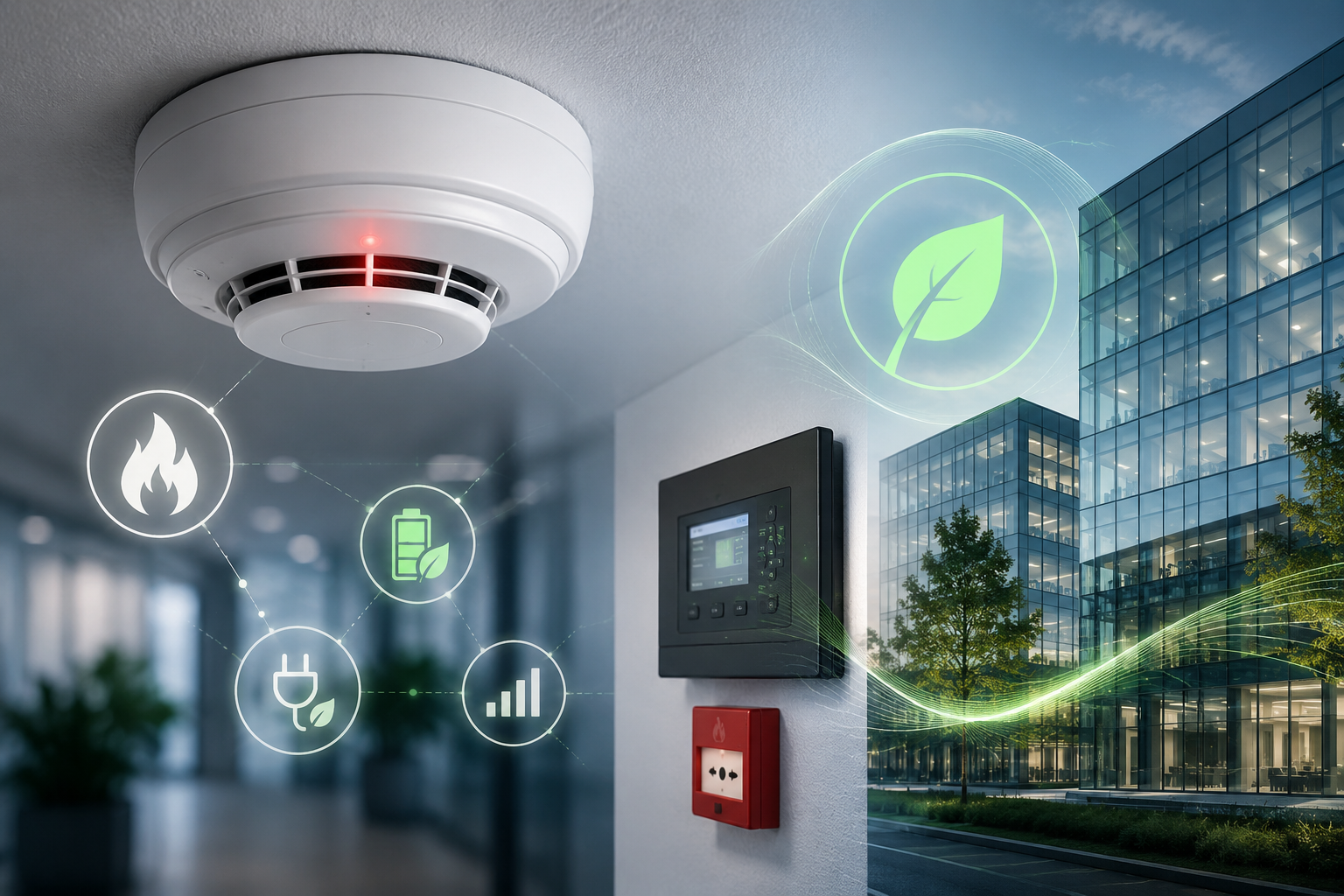
Fire detection systems are essential for protecting lives, property, and business operations. Traditionally, the focus of these systems has been on providing fast and reliable fire alerts. However, as sustainability becomes a priority for businesses and building owners, energy efficiency is emerging as an important consideration in fire safety design.
Modern buildings are increasingly expected to reduce energy consumption without compromising performance. This trend has led to the development of energy-efficient fire detection systems that combine advanced safety capabilities with lower power requirements. As a result, organizations can improve fire protection while supporting environmental goals and reducing operating costs.
Why Energy Efficiency Matters
Fire detection systems operate continuously, monitoring buildings 24 hours a day. In large facilities such as office towers, hospitals, factories, and shopping centers, hundreds or even thousands of devices may be connected to a single network. Although individual detectors consume relatively small amounts of power, their combined energy usage can become significant over time.
Reducing energy consumption offers several benefits. Lower electricity usage can help decrease operational expenses, while also supporting sustainability initiatives and green building certifications. For organizations working to reduce their carbon footprint, energy-efficient fire safety systems represent another step toward achieving environmental targets.
Technologies Driving Efficiency
Several technological advancements have contributed to the rise of energy-efficient fire detection systems.
One major development is the use of low-power sensors. Modern smoke and heat detectors are designed to operate with minimal energy while maintaining high levels of sensitivity and reliability. Advanced electronics allow these devices to continuously monitor environmental conditions without drawing excessive power.
Intelligent addressable systems have also improved efficiency. Unlike conventional systems that provide limited information, addressable systems allow each detector to communicate directly with the control panel. This enables more accurate monitoring, faster troubleshooting, and better resource management.
Another important innovation is the adoption of LED-based notification devices. Compared to traditional lighting technologies, LEDs consume less energy and have longer lifespans, reducing both electricity usage and maintenance requirements.
Integration with Smart Buildings
The growth of smart building technology has further accelerated the adoption of energy-efficient fire detection systems. Modern building management systems can integrate fire protection equipment with lighting, HVAC, security, and energy management platforms.
This integration allows facility managers to monitor system performance in real time and identify opportunities for optimization. For example, building operators can receive alerts about equipment requiring maintenance, helping ensure that systems remain efficient and reliable throughout their lifecycle.
Connected systems also provide valuable data that can support energy management strategies and sustainability reporting.
The Role of IoT and Remote Monitoring
The Internet of Things (IoT) is transforming fire safety by enabling devices to communicate and share information more effectively. IoT-enabled fire detection systems can transmit performance data to centralized platforms, allowing facility managers to monitor system health remotely.
This capability supports predictive maintenance, where potential issues can be identified before they lead to equipment failures. By addressing problems early, organizations can improve reliability while avoiding unnecessary maintenance activities.
Remote monitoring also reduces the need for frequent on-site inspections, saving time and resources while maintaining high safety standards.
Benefits for Organizations
Energy-efficient fire detection systems offer advantages that extend beyond reduced power consumption.
Lower operating costs are often the most immediate benefit. Reduced electricity usage and fewer maintenance requirements can generate long-term savings, particularly in large facilities.
These systems can also improve reliability. Modern components are designed to operate efficiently for extended periods, reducing wear and helping maintain consistent performance.
Additionally, energy-efficient solutions support corporate sustainability initiatives. Many organizations are actively seeking technologies that help reduce environmental impact while maintaining operational effectiveness. Fire detection systems that align with these objectives can contribute to broader environmental, social, and governance (ESG) goals.
Looking Ahead
As buildings become smarter and more connected, energy-efficient fire detection systems are expected to become increasingly common. Advances in sensor technology, wireless communication, artificial intelligence, and data analytics will continue to improve both safety performance and energy management.
Future systems may be able to optimize their own power consumption, provide more accurate threat detection, and integrate seamlessly with other building technologies. These capabilities will help organizations create safer, more sustainable environments while controlling operational costs.
Conclusion
The rise of energy-efficient fire detection systems reflects the growing demand for solutions that balance safety, sustainability, and operational efficiency. By incorporating low-power technologies, intelligent monitoring, and smart building integration, these systems deliver reliable fire protection while reducing energy consumption.
As sustainability continues to shape building design and facility management, energy-efficient fire detection systems will play an increasingly important role in creating safer and more environmentally responsible spaces.